What Is CO2 Facial Treatment? Everything You Need to Know
Your skin has a repair switch. CO2 facial treatment flips it. Most people spend years trying creams and serums that sit on the surface and do little. Wrinkles deepen. Dark spots linger. Skin loses firmness year after year. CO2 laser and CO2-infused facials go past the surface. They trigger the skin from within, forcing it to rebuild collagen, shed damage, and resurface. This article explains exactly what CO2 facial treatment is, how it works, who it works for, and what results you can realistically expect. |
What Is CO2 Facial Treatment? The Full Definition
CO2 facial treatment refers to two distinct procedures that both use carbon dioxide, but in different ways:
The two types of CO2 facial treatment: • CO2 Laser Resurfacing: A medical-grade laser that removes damaged skin layers using concentrated carbon dioxide light energy • Carboxy Facial (CO2 Infusion): A non-laser treatment where CO2 gas is applied to the skin surface, triggering a biological oxygen-delivery response called the Bohr Effect |
Both treatments stimulate skin renewal, but they differ significantly in intensity, downtime, and who they suit. This guide covers both so you can understand which one applies to your skin goal.
If you are exploring which professional skin treatment is right for you, start with this guide on choosing the best facial for your skin type before reading further.
How Does CO2 Facial Treatment Work? The Science
CO2 Laser Resurfacing: How It Works
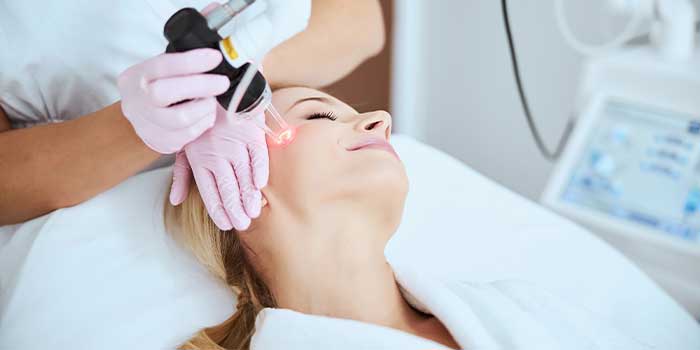
CO2 laser resurfacing uses a carbon dioxide laser to deliver short pulses of high-energy light to the skin. This energy vaporizes the outer layers of damaged skin with precision.
As the laser removes old skin, it also heats the deeper dermis. This heat signals fibroblast cells to produce new collagen. The result is resurfaced, tighter, and more even skin as healing completes.
CO2 Laser Resurfacing: What Happens at Each Depth
Skin Layer | What CO2 Laser Does | Visible Outcome |
Epidermis (top layer) | Vaporizes dead and damaged cells | Smoother texture, even tone |
Papillary dermis | Heats tissue to stimulate repair | Collagen production begins |
Reticular dermis | Triggers fibroblast activity | Skin tightening over weeks |
Subcutaneous tissue | Not targeted at standard settings | No deep tissue disruption |
Carboxy Facial (CO2 Infusion): How It Works
A carboxy facial takes a completely different approach. A gel or mask saturated with CO2 is applied directly to the skin. Your body detects the sudden increase in CO2 and responds with the Bohr Effect.
What is the Bohr Effect? The Bohr Effect is a physiological response where the body rushes oxygenated blood to an area that has elevated CO2 levels. In a carboxy facial, the skin detects CO2 on its surface and floods the area with oxygen and nutrients to compensate. This sudden oxygen surge accelerates cell renewal and brightens skin instantly. |
The carboxy facial is non-invasive, painless, and requires zero downtime. It is used for brightening, mild firming, and improving skin circulation. Results are visible immediately but are less dramatic than CO2 laser.
CO2 Laser vs Carboxy Facial: A Direct Comparison
Many people search for CO2 facial treatment and find information about both procedures mixed together. Here is a clear comparison so you know exactly what you are looking at.
CO2 Laser vs Carboxy Facial: Side-by-Side Comparison
Feature | CO2 Laser Resurfacing | Carboxy Facial (CO2 Infusion) |
Treatment type | Medical laser procedure | Non-invasive skin treatment |
Provider required | Dermatologist or plastic surgeon | Licensed esthetician |
Downtime | 7 to 14 days | None |
Pain level | Moderate to high (numbing used) | Mild tingling only |
Depth of treatment | Epidermis and dermis | Epidermis and surface circulation |
Primary benefit | Resurfacing, wrinkles, scars | Brightening, glow, mild firming |
Results timeline | 4 to 12 weeks post-healing | Immediate, builds over sessions |
Number of sessions | 1 to 3 | 6 to 10 sessions |
Suitable for all skin tones | Caution needed for darker tones | Safe for all skin tones |
Cost range | High ($1,000 to $5,000+) | Moderate ($80 to $250 per session) |
Not sure whether you need a medical provider or a licensed esthetician for your treatment? This comparison of esthetician vs dermatologist explains the difference clearly and helps you choose the right professional.
What Does CO2 Facial Treatment Treat? A Condition-by-Condition Breakdown
CO2 facial treatment targets a wide range of skin concerns. The level of improvement depends on which type of CO2 treatment you choose and how consistently you use it.
Fine Lines and Deep Wrinkles
CO2 laser resurfacing is one of the most studied treatments for facial lines. It removes the surface layer of wrinkled skin and triggers new collagen to fill lines from below. Results from a single ablative CO2 session can last years.
Carboxy facials improve fine lines through repeated oxygen delivery and improved cell metabolism. Results are subtler but build over a series of sessions.
Acne Scars and Textural Damage
Raised, pitted, and rolling scars respond well to CO2 laser resurfacing. The laser removes scar tissue at the surface and stimulates dermal remodeling in the layers beneath. Fractional CO2 lasers are especially effective because they target only a fraction of the skin at a time, leaving healthy tissue intact for faster healing.
If you are comparing treatment options for textural skin issues, read this breakdown of microdermabrasion vs microneedling to see how they compare to CO2 approaches.
Hyperpigmentation and Sun Damage
Sun spots, age spots, and uneven skin tone respond well to CO2 laser resurfacing because the laser ablates the melanin-rich surface layers. Carboxy facials also improve pigmentation through improved oxygenation and cell turnover.
For additional strategies to address dark spots, this article on reducing hyperpigmentation naturally outlines what works alongside professional treatments.
Skin Laxity and Loss of Firmness
As collagen declines with age, skin loses its structure. CO2 laser heat tightens existing collagen fibers immediately while also prompting the production of new ones. The tightening effect becomes fully visible about 3 to 6 months after treatment.
Enlarged Pores
Pores look larger when surrounding skin is loose or congested. CO2 treatments tighten the dermis around each pore, making them appear smaller. Regular carboxy facials also keep pores cleaner through improved circulation and cell turnover.
CO2 Treatment Results by Skin Concern
Skin Concern | CO2 Laser Effectiveness | Carboxy Facial Effectiveness |
Fine lines | High | Moderate |
Deep wrinkles | High | Low to moderate |
Acne scars | High (especially fractional) | Low |
Hyperpigmentation | High | Moderate |
Skin laxity | High | Moderate |
Enlarged pores | Moderate to high | Moderate |
Dull skin / glow | Moderate | High |
Uneven texture | High | Moderate |
Redness / rosacea | Use with caution | Low risk, mild benefit |
What to Expect Before, During, and After CO2 Facial Treatment
Before Your Treatment
Preparation differs depending on which CO2 treatment you are having.
CO2 Laser Pre-Treatment Checklist: • Stop retinoids and exfoliating acids at least 7 days before • Avoid sun exposure for 2 to 4 weeks before treatment • Antiviral medication may be prescribed if you have a history of cold sores • A topical numbing cream is applied 30 to 60 minutes before the procedure • Darker skin tones may need a skin-prepping protocol to reduce pigmentation risk |
Carboxy Facial Pre-Treatment: • No special preparation required • Arrive with clean skin, free of makeup • Suitable for all skin tones with no pre-treatment protocol |
If this is your first professional skin treatment, this guide on what to expect at your first facial walks you through the entire process so you know what you will experience.
During the Treatment
A CO2 laser session takes 30 to 90 minutes depending on the area treated. You will feel warmth and some stinging even with numbing cream. Fractional CO2 is less intense than fully ablative treatment.
A carboxy facial takes about 30 to 45 minutes. A CO2-rich gel or sheet mask is applied to the face. You feel a mild tingling as the gas absorbs into the skin. There is no heat, no needles, and no discomfort beyond the fizzing sensation.
After the Treatment
Post-treatment care is where results are made or lost.
CO2 Facial Treatment Recovery: What to Expect
Timeframe | CO2 Laser Recovery | Carboxy Facial Recovery |
Day 1 to 3 | Redness, swelling, oozing (normal) | No downtime, mild flush |
Day 4 to 7 | Skin begins to peel and flake | Skin appears brighter |
Week 2 | New pink skin emerges | Continued improvement |
Week 3 to 4 | Redness fades, skin normalizes | Optimal results mid-series |
Month 2 to 3 | Collagen remodeling continues | Results build with sessions |
Month 4 to 6 | Full results visible | Maintenance recommended |
After any facial treatment, the right post-care routine makes a major difference in results. Read this guide on how to maintain facial results to protect your skin during recovery and beyond.
One common question is whether you can wear makeup immediately after treatment. After CO2 laser, the answer is no. After a carboxy facial, it is best to wait. Read why in this article on can you wear makeup after a facial.
Who Is a Good Candidate for CO2 Facial Treatment?
CO2 facial treatment is not one-size-fits-all. Candidacy depends on the type of treatment, your skin tone, skin condition, and health history.
Ideal candidates for CO2 laser resurfacing: • Fair to medium skin tones (Fitzpatrick I to III) with lower risk of post-inflammatory hyperpigmentation • Adults with visible sun damage, fine lines, or acne scars • People not using blood thinners or photosensitizing medications • Non-smokers or those willing to stop smoking before treatment • People with realistic expectations and ability to take recovery time |
Ideal candidates for carboxy facials: • All skin tones and skin types • Anyone seeking brightness, glow, and mild firming without downtime • People with dull, tired, or dehydrated skin • Those who cannot take time off for laser recovery • People looking for a maintenance treatment between more intensive procedures |
Who should avoid CO2 laser treatment: • Darker skin tones without specialist evaluation (risk of hyperpigmentation) • Active acne or skin infections in the treatment area • Recent use of isotretinoin (Accutane) within the past 6 to 12 months • Pregnant or breastfeeding individuals • Those with active autoimmune conditions or keloid scarring history |
CO2 Facial Treatment vs Other Popular Skin Treatments
Patients often ask how CO2 treatment compares to other options. Here is a straight comparison across the most popular alternatives.
CO2 Laser vs Alternative Treatments: Comparison Table
Treatment | Depth | Collagen Stimulation | Downtime | Best For |
CO2 Laser (ablative) | Epidermis + dermis | Very high | 7 to 14 days | Scars, deep wrinkles, sun damage |
Fractional CO2 Laser | Fractional dermis | High | 5 to 7 days | Scars, texture, mixed concerns |
Chemical Peel (deep) | Mid to deep dermis | Moderate to high | 7 to 14 days | Pigmentation, lines |
Microneedling | Mid dermis | Moderate | 2 to 3 days | Scars, pores, mild aging |
Radio Frequency | Deep dermis | Moderate | None to minimal | Skin tightening, laxity |
Carboxy Facial | Epidermis / surface | Low to moderate | None | Glow, circulation, mild firming |
Microcurrent Facial | Muscle layer | Indirect | None | Lifting, muscle toning |
Radio frequency treatment targets skin tightening through heat in the deeper dermis. Read this breakdown of how radio frequency facial works to see how it compares to CO2 for skin firming.
Chemical peels also remove surface layers but use acids rather than laser energy. Before choosing between the two, read about chemical peel benefits and risks so you understand the trade-offs.
Microcurrent facials work at the muscle level rather than the skin surface. Read more about what a microcurrent facial is to see if it fits your goals alongside or instead of CO2 treatment.
Types of CO2 Laser: Ablative vs Fractional vs Non-Ablative
Not all CO2 lasers are the same. The type your provider uses determines the depth, downtime, and result you get.
Fully Ablative CO2 Laser
This removes the entire surface of the treated area. It is the most aggressive option and delivers the most dramatic results for severe wrinkles, scars, and sun damage. Recovery takes 10 to 14 days. It is rarely used on the full face today due to downtime and risks.
Fractional CO2 Laser
Fractional CO2 targets only a fraction of the skin at a time, leaving healthy tissue untouched between treatment zones. This speeds healing significantly while still delivering deep collagen stimulation. Most providers today use fractional CO2 for a better risk-to-result ratio.
Non-Ablative CO2 Approaches
Some devices combine CO2 with other wavelengths to heat the dermis without removing the surface. These are gentler, have less downtime, but also produce less dramatic results.
How to choose between CO2 laser types: • Severe scars or deep wrinkles: fully ablative CO2 may be recommended • Moderate concerns with some downtime available: fractional CO2 is the standard choice • Mild concerns with no downtime: carboxy facial or non-ablative options • Maintenance after a laser treatment: carboxy facials keep results going |
CO2 Facial Treatment for Specific Skin Conditions
CO2 Treatment for Hormonal Acne and Post-Acne Scars
Hormonal acne leaves behind scars that standard facials cannot address. CO2 laser resurfacing, particularly fractional CO2, directly targets pitted and rolling scars by removing damaged tissue and stimulating new skin structure.
Active hormonal acne requires different management before any laser treatment. Read this guide on how to treat hormonal acne to understand how to manage breakouts before moving to resurfacing treatment.
CO2 Treatment and Rosacea
CO2 laser treatment can treat the visible blood vessels associated with rosacea but must be used carefully. Aggressive heat can worsen redness in reactive skin. Carboxy facials are generally safer for rosacea-prone skin.
Before booking any laser treatment if you have rosacea, read this article on treating rosacea safely to understand which approaches reduce redness without triggering a flare.
CO2 Treatment for Back Acne Scarring
CO2 laser resurfacing is not limited to the face. Many providers use it on the back, chest, and neck to treat scarring from body acne. The same principles of collagen stimulation and surface resurfacing apply.
If back acne is an ongoing concern, first read about back acne causes and solutions to address the root cause before investing in resurfacing treatments.
Active Ingredients That Enhance CO2 Facial Treatment Results
What you apply to your skin before and after CO2 treatment directly affects how well it heals and how long results last. Some ingredients accelerate recovery. Others should be completely avoided during healing.
Ingredients to Use and Avoid Around CO2 Treatment
Ingredient | Use Before? | Use After? | Reason |
Vitamin C serum | Yes (stop 2 days before) | Yes (after full healing) | Antioxidant protection, brightening |
Retinoids | Stop 7 days before | Resume after 4 to 6 weeks | Can cause excess irritation |
Glycolic / AHAs | Stop 7 days before | Reintroduce after 6 weeks | Risk of over-exfoliation |
Mandelic acid | Stop 5 days before | Gentle reintroduction at week 4 | Milder but still active |
Hyaluronic acid | Yes | Yes (immediately) | Hydration support during healing |
SPF (broad spectrum) | Yes (essential) | Yes (critical) | Prevents post-treatment pigmentation |
Saffron extract | Yes | Yes | Anti-inflammatory and brightening |
Meristem extract | Yes | Yes (supports repair) | Promotes cellular renewal |
Vitamin C is one of the best post-treatment serums for protecting new skin. Read about the full range of vitamin C serum benefits to understand why it pairs so well with resurfacing treatments.
If you want to understand the difference between acids used before treatment, this comparison of mandelic acid vs glycolic acid explains which is safer for sensitive or post-treatment skin.
Saffron has natural antioxidant and anti-inflammatory properties that support skin healing. Read about saffron benefits for skin to see how it supports the recovery process.
Meristem extract from plant stem cells supports cellular regeneration after treatment. Read more on what meristem extract is and how it helps skin rebuild after intensive procedures.
SPF and Product Layering After CO2 Facial Treatment
Sun protection after CO2 treatment is not optional. New skin that emerges after resurfacing is more vulnerable to UV damage. A single day of unprotected sun exposure can undo weeks of healing and create new pigmentation.
You need an SPF that sits well on healing skin without clogging pores or causing sensitivity. This guide on choosing the right SPF for your skin type helps you pick one that protects without irritating post-treatment skin.
Product layering also matters during recovery. Oil-based and water-based products interact differently with raw or sensitive skin. Read this breakdown of oil-based vs water-based products to layer your post-treatment routine correctly.
How Often Should You Get CO2 Facial Treatment?
Frequency depends entirely on the type of CO2 treatment and your skin goals.
CO2 Treatment Frequency Guidelines: • Fully ablative CO2 laser: typically once, with results lasting 3 to 5 years • Fractional CO2 laser: 1 to 3 sessions, spaced 4 to 6 weeks apart • Carboxy facial: 6 to 10 sessions initially, then monthly maintenance • Maintenance carboxy facials: every 4 to 6 weeks to sustain results |
For a full guide on scheduling professional skin treatments, read this article on how often you should get a facial which covers frequency recommendations across all facial types.
CO2 Facial Treatment in Los Angeles: What to Look For
Los Angeles has hundreds of medical spas, dermatology clinics, and esthetician studios offering CO2 treatments. The range in quality, pricing, and safety is enormous.
Ask these questions before booking any CO2 laser treatment:
1. Is the provider board-certified in dermatology or plastic surgery for ablative CO2 laser?
2. Do they perform a Fitzpatrick skin type assessment before treatment?
3. What type of CO2 laser system do they use (fractional vs fully ablative)?
4. Do they offer a consultation before the procedure day?
5. What does post-care include, and is it provided or purchased separately?
Los Angeles skin also faces specific environmental stressors that influence treatment timing and recovery.
If you live in LA and want to understand how the local climate affects your skin baseline, read this guide on a skin care routine for the Los Angeles climate to prepare your skin before and after treatment.
When choosing between the many treatment options available in the city, this detailed guide on how to choose a facial treatment in Los Angeles helps you narrow down providers and treatment types for your specific skin concern.
What Clinical Research Says About CO2 Facial Treatment
CO2 laser resurfacing has decades of clinical evidence behind it. Here are three external sources worth reading before your consultation:
6. The American Society of Plastic Surgeons published findings showing that CO2 laser skin resurfacing produces consistent results for wrinkles, scars, and sun damage across patient groups, making it one of the most reviewed resurfacing procedures available.
7. A study published in the National Institutes of Health database examined fractional CO2 laser treatment outcomes for acne scars and photoaged skin, confirming that fractional delivery reduces side effects while maintaining effectiveness.
8. The American Academy of Dermatology outlines what patients should know before choosing laser skin resurfacing, including realistic expectations and the importance of provider credentials.
Frequently Asked Questions About CO2 Facial Treatment
Is CO2 facial treatment painful?
CO2 laser resurfacing involves numbing cream beforehand, but you will still feel heat and some discomfort. Fractional CO2 is less intense than fully ablative. Carboxy facials produce only a mild tingling sensation and are considered comfortable.
How long do CO2 facial treatment results last?
A single fully ablative CO2 laser session can produce results that last 3 to 5 years for wrinkles and sun damage. Fractional CO2 results last 1 to 3 years with proper sun protection. Carboxy facial results last weeks per session and require ongoing maintenance.
Can CO2 laser be used on darker skin tones?
Ablative CO2 laser carries a higher risk of post-inflammatory hyperpigmentation in darker skin tones (Fitzpatrick IV to VI). A specialist can still perform the treatment with a modified protocol, pre-treatment skin preparation, and close post-care monitoring. Carboxy facials are safe for all skin tones.
What is the difference between CO2 and Erbium laser?
Both are ablative lasers used for resurfacing. CO2 laser penetrates deeper and produces more dramatic results with longer downtime. Erbium laser is more superficial, causes less surrounding tissue damage, and heals faster. CO2 is typically chosen for deeper scars and wrinkles.
Can I combine CO2 treatment with other facials?
After CO2 laser, your skin needs 4 to 8 weeks to heal before any other active treatment. After a carboxy facial, you can combine it with other gentle treatments. Many providers offer carboxy facials as a complement to microneedling, LED therapy, or microcurrent to extend and maintain results.
For a related technology that pairs well with CO2 treatments, read about LED light therapy benefits and how red and near-infrared light accelerates post-laser healing.
You can also read about photo facials, which use intense pulsed light rather than CO2, in this guide on what a photo facial treatment is to compare light-based options side by side.
What Is CO2 Facial Treatment? The Key Takeaways: • CO2 facial treatment includes both CO2 laser resurfacing and carboxy (CO2 infusion) facials • CO2 laser removes damaged skin layers and triggers deep collagen rebuilding • Carboxy facials use the Bohr Effect to flood skin with oxygen for instant brightness and mild firming • CO2 laser suits people with scars, wrinkles, and sun damage who can handle 7 to 14 days of downtime • Carboxy facials suit all skin tones and skin types with zero downtime • Fractional CO2 is the most commonly used laser type today because it balances results with faster recovery • SPF and proper product layering after treatment protect and extend your results • Consistency matters: carboxy facials build results over a series of sessions • Choosing the right provider and treatment type for your skin tone and concern is the most critical decision Whether you are ready to book a consultation or still weighing your options, the next step is understanding what your skin specifically needs. Read the full guide on the benefits of a facial treatment to build a clear picture of where CO2 treatment fits in your skin care plan. |