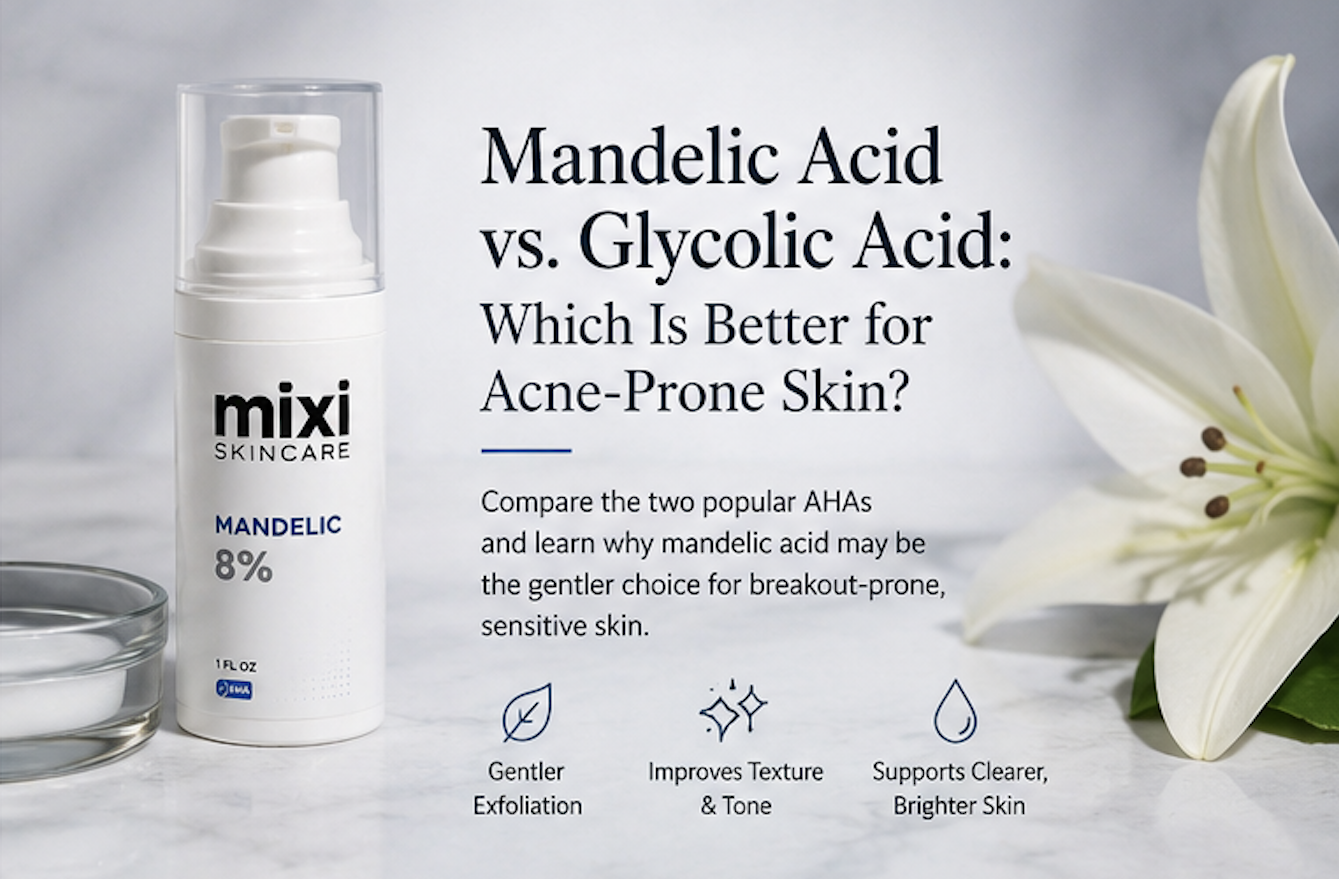
Mandelic Acid vs Glycolic Acid: Which Is Better for Acne-Prone Skin?
Exfoliating acids can help improve the look of texture, dullness, clogged pores, and uneven tone. But not every acid is right for every skin type. If your skin is acne-prone, sensitive, or redness-prone, choosing the wrong exfoliant can lead to irritation.
Two popular exfoliating acids are mandelic acid and glycolic acid. Both are alpha hydroxy acids, also known as AHAs, but they can feel very different on the skin.
At Aelita’s Beauty, Mixi Mandelic 5% L-Mandelic Acid Serum is recommended for acne-prone, redness-prone, oily, uneven, and sun-exposed skin.
What Is Glycolic Acid?
Glycolic acid is a well-known exfoliating acid often used for dull skin, rough texture, uneven tone, and fine lines. It is popular because it can give the skin a smoother and brighter appearance.
However, glycolic acid may feel too strong for some people, especially if the skin is already sensitive, inflamed, acne-prone, or using other active ingredients.
What Is Mandelic Acid?
Mandelic acid is also an AHA, but it is often considered a gentler exfoliating option. It can be a better choice for people who want smoother, clearer-looking skin without jumping into a very strong acid routine.
Mixi Mandelic 5% L-Mandelic Acid Serum is especially useful for clients dealing with acne-prone skin, redness, dark spots, uneven texture, melasma-looking discoloration, oily skin, congestion, and sun-related pigmentation.
Mandelic Acid vs Glycolic Acid for Acne-Prone Skin
For acne-prone skin, stronger is not always better. The best exfoliant is the one your skin can tolerate consistently.
Mandelic acid may be a better choice if your skin is:
Acne-prone
Sensitive
Redness-prone
Oily but easily irritated
Prone to post-acne marks
Uneven in tone or texture
New to exfoliating acids
Glycolic acid may be better if your skin is not sensitive and your main concern is stronger exfoliation, dullness, or rough texture.
For many acne-prone clients, mandelic acid is a smart starting point because it supports exfoliation while being more suitable for skin that reacts easily.
How to Use Mandelic Acid in Your Routine
Start with clean skin. Use Mixi Clean Gentle Gel Cleanser to remove sunscreen, oil, makeup, and daily buildup. Then apply Mixi Mandelic 5% L-Mandelic Acid Serum at night.
Follow with a moisturizer to keep the skin barrier comfortable. If your skin feels dry or sensitive, Saffron Meristem Cream can help support hydration and barrier comfort.
In the morning, always use sunscreen. Exfoliating acids can make sun protection even more important. SPF Solar Shield 30 Classic Tint is a strong daily option for Los Angeles sun exposure.
Can Mandelic Acid Help With Dark Spots?
Mandelic acid can support a brighter and more even-looking complexion by helping remove dull surface buildup. For acne-prone skin, this can be helpful when breakouts leave visible marks or uneven tone.
Aelita recommends Mixi Mandelic 5% L-Mandelic Acid Serum for clients who want support with texture, dark spots, acne-prone skin, melasma-looking discoloration, and sun-exposed skin.
Professional Treatment Support
If you want more advanced exfoliation, Aelita’s Chemical Peel Facial may help improve the look of pigmentation, acne marks, texture, and dullness under professional care.
Final Thoughts
Mandelic acid and glycolic acid can both be useful, but acne-prone skin needs a gentle and consistent approach. If your skin is sensitive, redness-prone, oily, or prone to post-acne marks, mandelic acid may be the better first choice.
For a gentle exfoliating step, Mixi Mandelic 5% L-Mandelic Acid Serum can help support smoother, clearer, and more even-looking skin.