Vitamin C is the most studied antioxidant in skincare history — and one of the most wasted. Millions apply it daily and see little result, not because the ingredient fails them, but because small application mistakes completely destroy its effectiveness.
The problem is timing, pH, layering order, and formulation — details product labels rarely explain. The solution is understanding the science behind how vitamin C actually functions in skin. Read this guide and you will know exactly how to use vitamin C serum correctly to brighten, firm, protect, and genuinely transform your complexion.
What Is Vitamin C Serum and Why Does It Matter for Your Skin?
Vitamin C — chemically known as ascorbic acid — is a water-soluble antioxidant the human body cannot synthesize independently. While its systemic role in immune function is thoroughly documented by the National Institutes of Health, its power in topical skincare is equally profound and increasingly validated by rigorous clinical evidence.
In the skin, vitamin C performs three distinct and simultaneously valuable functions: it neutralizes free radicals generated by UV radiation and urban pollution, it inhibits the enzyme tyrosinase which drives excess melanin (dark spot) production, and it is an essential co-factor for the enzymes that build stable collagen fibers. No other single skincare ingredient performs all three of these functions at once.
A high-quality vitamin C serum is therefore not a luxury add-on to your routine — it is a foundational active that addresses the three biggest drivers of premature aging and uneven skin tone simultaneously. For a full breakdown of what this ingredient can achieve, our dedicated article on vitamin C serum benefits for skin covers the clinical research in comprehensive detail.
The Different Forms of Vitamin C Used in Skincare
Not all vitamin C serums are equal. The form of vitamin C in your product determines its potency, stability, and penetration depth — and understanding the differences is essential to choosing something that will actually work for your skin type.
Table 1: Vitamin C Derivatives in Skincare — Stability, Potency, and Ideal Skin Types
Form | Potency | Stability | pH Required | Best Skin Type |
L-Ascorbic Acid (LAA) | Highest | Low — oxidises quickly | Below 3.5 | Normal / Oily |
Ascorbyl Glucoside | Moderate | High | 5.0–7.0 | Sensitive / Dry |
Sodium Ascorbyl Phosphate | Moderate | Very High | 6.0–7.0 | Acne-Prone / Sensitive |
Ascorbyl Tetraisopalmitate | Moderate–High | Very High | Oil-soluble | Dry / Mature |
3-O-Ethyl Ascorbic Acid | High | High | 4.0–6.0 | All Skin Types |
Magnesium Ascorbyl Phosphate | Moderate | High | 6.0–7.0 | Sensitive / Rosacea |
If you have sensitive or reactive skin — including rosacea — the lower-potency, higher-stability derivatives are almost always a better starting point than L-ascorbic acid. Our guide to treating rosacea safely covers which active ingredients to approach with caution for reactive skin types.
The Science-Backed Benefits of Applying Vitamin C Serum the Right Way
Vitamin C applied incorrectly — in the wrong pH environment, in the wrong sequence, or on unprepared skin — may produce zero measurable benefit. Applied correctly, the evidence is compelling. Here is what consistent, correct vitamin C serum use delivers:
• Brightening and even skin tone: Vitamin C inhibits tyrosinase, reducing the appearance of sunspots, post-acne marks, and uneven pigmentation. Clinical studies typically show visible results within eight to twelve weeks of consistent, correct daily use.
• Antioxidant and photoprotection: Vitamin C neutralizes reactive oxygen species (ROS) generated by UV exposure and environmental pollution. While not a sunscreen replacement, it significantly enhances SPF performance when layered correctly beneath sunscreen.
• Collagen synthesis and anti-aging: As a required co-factor for prolyl hydroxylase and lysyl hydroxylase — the enzymes that build collagen — vitamin C directly firms skin texture, reduces fine line depth, and improves elasticity over time.
• Wound healing and post-procedure recovery: Vitamin C accelerates fibroblast activity and supports skin barrier repair after professional procedures — making it valuable in the recovery phase after peels, microneedling, and energy-based treatments.
If hyperpigmentation is your primary concern, combining your vitamin C serum with the strategies in our article on reducing hyperpigmentation naturally will give you the most comprehensive brightening protocol available — addressing dark spots from multiple biological angles simultaneously.
How to Choose the Right Vitamin C Serum Before You Apply It
Knowing how to use vitamin C serum correctly starts before the bottle is even opened. An ineffective product applied perfectly still delivers poor results. Here is what to examine on the label and ingredient list:
Concentration: Finding the Effective Range
For L-ascorbic acid (LAA) — the most studied and potent form — the effective concentration range is 10 to 20 percent. Below 10 percent, the antioxidant benefit is minimal. Above 20 percent, irritation risk increases significantly without a proportional gain in benefit. For most people, a 15 percent LAA serum hits the optimal balance between efficacy and tolerability.
For derivative forms, effective concentrations vary — up to 25 percent is sometimes used to compensate for lower rates of conversion to active ascorbic acid within the skin.
pH: The Most Overlooked Factor in Vitamin C Application
This is where most serums fail users without them knowing it. L-ascorbic acid is only stable and capable of penetrating the skin at a pH below 3.5. At higher pH levels, it cannot cross the skin barrier effectively and oxidizes rapidly. Many products marketed as gentle or pH-balanced have a pH of 5.5 to 7.0, which renders their LAA content essentially inactive.
Pro tip: If your vitamin C serum smells faintly sour or tangy, that is normal for an effective, acidic LAA product. If it is completely odourless and has a high pH, check whether it uses a more stable derivative form — the formulation philosophy is very different.
Packaging: Light and Air Are Your Serum's Greatest Enemies
• Avoid clear glass bottles: L-ascorbic acid degrades rapidly with light exposure. Choose amber, dark, or opaque packaging.
• Prioritize air-restrictive dispensing: Pump or dropper bottles with minimal air contact are far superior to wide-mouthed jars that expose the product to oxidation with every use.
• Watch for oxidation: A fresh vitamin C serum should be clear to pale yellow. If it has turned orange or brown, it has oxidised and lost the majority of its potency. Replace it immediately.
Supporting Ingredients That Amplify Vitamin C Performance
• Vitamin E (tocopherol): Creates a powerful antioxidant synergy with vitamin C — each regenerates the other after neutralizing a free radical. The C + E + Ferulic combination is the clinical gold standard for photoprotection.
• Ferulic acid: Dramatically increases the photostability of both vitamin C and E, roughly doubling the photoprotective effect of the combined formula in clinical studies.
• Hyaluronic acid: A humectant that supports absorption without compromising the acidic pH environment vitamin C requires.
• Niacinamide: Effective for brightening and barrier support — but best applied separately from high-concentration LAA to avoid potential yellowing caused by niacin conversion at very low pH.
For a deeper look at how vitamin C pairs and competes with exfoliating acids, our guide on mandelic acid vs glycolic acid will help you build a layering schedule that maximises results without pH conflict or over-exfoliation.
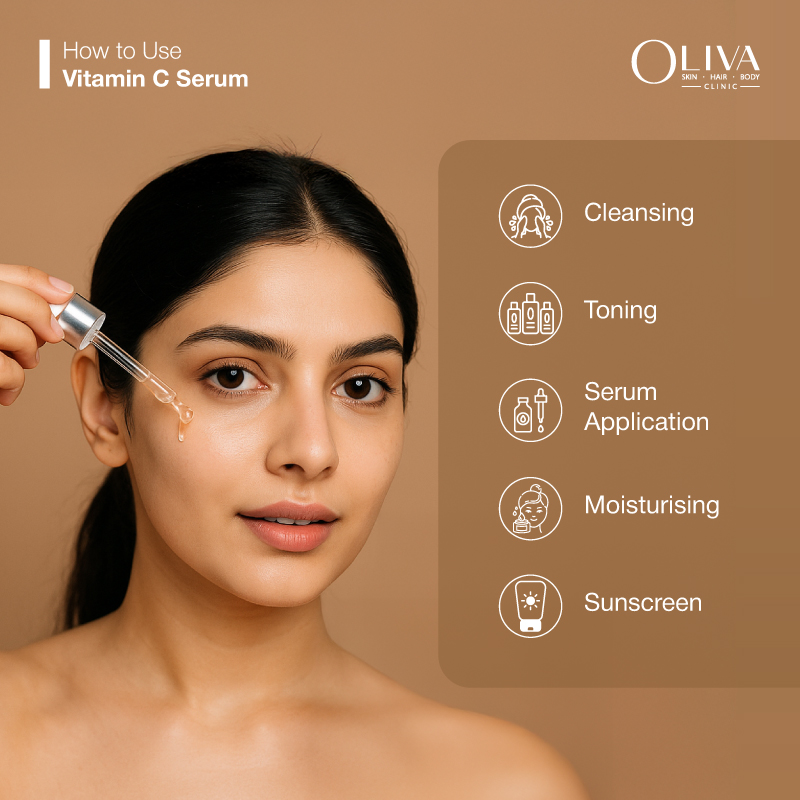
How to Use Vitamin C Serum Correctly: The Complete Step-by-Step Method
This is the section most product guides skip — the exact protocol that determines whether your serum performs brilliantly or does almost nothing. Follow each step, and the results will be unambiguous.
Step 1: Start with a Clean, pH-Ready Canvas
Vitamin C serum should always be applied to freshly cleansed skin. Use a gentle, sulfate-free cleanser that does not raise your skin's pH significantly above 5.5. Avoid alkaline cleansers containing baking soda or soap-based formulas — these push skin pH to 8.0 or above, creating an environment where L-ascorbic acid struggles to absorb.
After cleansing, lightly pat your skin but leave it slightly damp. Slightly moist skin improves the absorption of water-soluble actives like vitamin C and can reduce the tingling sensation associated with acidic formulas.
Step 2: Apply Toner — But Choose It Carefully
If your routine includes a toner, apply after cleansing and allow full absorption before vitamin C. Avoid toners with alkaline ingredients. If you use an exfoliating toner containing glycolic or salicylic acid, wait at least 20 minutes before applying vitamin C to avoid over-acidification and barrier disruption. Our skincare routine guide for the Los Angeles climate has specific product-sequencing advice for warm-climate routines where layering multiple actives is common.
Step 3: Dispense the Correct Amount
Three to five drops — roughly the size of a pea — is the appropriate amount for the full face and neck. More product does not mean more benefit: excess serum increases irritation risk and wastes product without proportional gain. Dispense onto your fingertips rather than directly onto skin — this ensures more even distribution.
Step 4: Apply Using the Press-and-Hold Technique
Rather than rubbing the serum in, use your fingertips to press and hold small amounts across the face, working from the center outward. This technique:
• Reduces mechanical friction that can irritate sensitized skin
• Encourages deeper absorption through gentle follicular pressure
• Prevents uneven distribution that creates patchy areas of high concentration
Pay particular attention to areas of concern: forehead, cheeks, upper lip (for perioral hyperpigmentation), and any persistent dark spots. Allow the serum to fully absorb — typically two to three minutes — before applying subsequent products.
Step 5: Wait — The Two-Minute Rule
Applying moisturizer immediately over a freshly applied acidic vitamin C serum is a common and costly mistake. The neutral or alkaline pH of a moisturizer will begin neutralizing the acidic environment that LAA needs to penetrate effectively. Waiting two to five minutes after serum application allows ascorbic acid to absorb before the pH environment around it shifts.
Golden rule for how to use vitamin C serum correctly: Apply serum, set a two-minute timer, then continue with the rest of your routine. This single habit adjustment can dramatically improve the results you see.
Step 6: Apply Moisturizer to Lock In and Support
After the absorption window, apply your moisturizer. For daytime, choose a formula that complements vitamin C without pH conflict — ceramides, peptides, and niacinamide all work in harmony at this stage. If your routine also addresses hormonal acne alongside brightening, our article on how to treat hormonal acne includes moisturizer recommendations that balance breakout control with the barrier support your serum routine requires.
Step 7: Apply SPF — Non-Negotiable in a Vitamin C Routine
Sunscreen is not optional alongside vitamin C — it is mandatory. UV exposure generates the exact free radicals that vitamin C works to neutralize. Applying vitamin C without SPF is the equivalent of filling a bucket with a hole in the bottom. The American Academy of Dermatology confirms that combining a topical antioxidant like vitamin C with broad-spectrum SPF 30 or higher provides significantly superior photoprotection compared to either used alone. Apply SPF last, every single morning.
Morning vs Evening: When Should You Use Vitamin C Serum?
Timing is not arbitrary — it is determined by your primary skin goal and your tolerance level.
Table 2: Morning vs Evening Vitamin C Serum Application — Pros, Cons, and Best Uses
Factor | Morning Application | Evening Application |
Primary benefit | Antioxidant defence against UV and pollution | Collagen synthesis support during overnight skin repair |
Pairs best with | SPF, lightweight moisturizer, antioxidant-rich base | Peptides, hyaluronic acid; retinoids on alternating nights |
Oxidation risk | Higher — light accelerates serum degradation on shelf | Lower — dark storage and no light exposure post-application |
Sensitivity | Some formulas cause daytime tingling or redness | Skin more receptive; any irritation resolves overnight |
Results focus | Brightening, photoprotection, pollution defence | Anti-aging, collagen stimulation, overnight renewal |
Verdict for most users | Ideal — photoprotection synergy is the primary reason | Excellent for sensitive skin or those pairing with overnight actives |
For most users, morning application is the recommended choice because vitamin C's antioxidant action is most needed during daytime UV and pollution exposure. If morning application causes visible redness, switching to an evening protocol is entirely valid — collagen synthesis benefits are equivalent regardless of AM or PM timing.
Can you apply vitamin C serum twice daily? Yes — for stable derivative forms at lower concentrations. For high-concentration LAA (15 to 20 percent), once daily is sufficient and keeps cumulative irritation risk manageable.
How to Layer Vitamin C Serum Correctly With Other Skincare Actives
Incorrect layering is the most common cause of vitamin C serum failure. Combining it with incompatible actives — or applying it in the wrong order — can inactivate the serum entirely or drive unnecessary irritation. This is one of the most important aspects of knowing how to use vitamin C serum correctly in a multi-step routine.
Table 3: Vitamin C Serum Compatibility Guide — What to Layer, Avoid, and Separate
Ingredient | Compatibility | Notes and Best Practice |
Vitamin E + Ferulic acid | Excellent | The gold standard trio; formulate together or layer immediately; dramatically enhances photostability and antioxidant power |
Hyaluronic acid | Excellent | Apply immediately after vitamin C to seal hydration without any pH conflict |
Niacinamide | Good with care | Apply at a different time of day; same-session layering at very low pH may cause temporary yellowing |
Retinol / Retinoids | Alternate | Use vitamin C in AM, retinoid in PM — do not layer together due to pH incompatibility and stability |
AHAs (glycolic, lactic, mandelic) | Alternate | Separate by time; using both simultaneously risks over-acidification and barrier disruption |
BHA (salicylic acid) | Alternate | Use one at a time; vitamin C in AM, salicylic acid in PM works well for acne-prone skin |
Benzoyl peroxide | Avoid together | BPO oxidises vitamin C and renders it inactive; use BPO exclusively in a separate PM routine |
Peptides | Good | Apply after vitamin C has fully absorbed; no pH conflict at this stage |
Mineral or chemical SPF | Essential | Always the final morning step; vitamin C under SPF is significantly more protective than either alone |
How to Use Vitamin C Serum Correctly for Your Skin Type
The same serum applied identically to different skin types can produce vastly different experiences. Customising your protocol based on your skin type is central to knowing how to use vitamin C serum correctly. For a broader guide to skin-type-based treatment selection, our article on finding the best facial for your skin type is an excellent companion resource.
Oily and Acne-Prone Skin
This is the skin type that benefits most from L-ascorbic acid at higher concentrations. The low-pH, water-based formula suits an already oily environment and delivers the most potent antioxidant and brightening effect. Sodium ascorbyl phosphate is also excellent here — it has demonstrated direct antibacterial activity against Cutibacterium acnes.
• Choose: Water-based LAA serum at 15–20%, pH below 3.5
• Apply: Every morning on clean skin before a non-comedogenic moisturizer
• Combine with: Niacinamide as a separate PM step; salicylic acid BHA in the evening
• Avoid: Oil-based vitamin C derivatives; heavy emollient layers immediately over the serum
Dry and Dehydrated Skin
Dry skin can find high-concentration LAA irritating due to the low pH interacting with a compromised barrier. Derivative-based serums in a hydrating base are better tolerated while delivering excellent brightening and antioxidant results.
• Choose: Ascorbyl glucoside or ascorbyl tetraisopalmitate at 10–20% in a hydrating base
• Apply: On slightly damp skin to reduce irritation and improve spread
• Combine with: Hyaluronic acid immediately after; a ceramide-rich moisturizer to seal
• Avoid: Layering with AHAs on the same day — exfoliation on dry, depleted skin worsens sensitivity
Sensitive Skin and Rosacea
Sensitive skin requires the gentlest possible introduction — a stable derivative at the lowest effective concentration, introduced every two to three days before building to daily. If rosacea is present, our article on treating rosacea safely is essential reading before adding any new active to your routine.
• Choose: Magnesium ascorbyl phosphate or sodium ascorbyl phosphate at 5–10%, pH 5.5–7.0
• Apply: Begin every other day; build to daily over four to six weeks
• Combine with: Centella asiatica, bisabolol, or allantoin-based calming serums alongside
• Avoid: LAA above 10%, low-pH toners on the same day, retinoids in the same routine
Mature and Sun-Damaged Skin
This skin type has the most to gain from a high-potency LAA serum combined with ferulic acid and vitamin E. Sun damage and collagen depletion are precisely what this formulation was clinically designed to address — and the research here is the most robust of any combination in cosmeceutical skincare.
• Choose: LAA 15–20% with ferulic acid and vitamin E — look for CE Ferulic-type formulations
• Apply: Every morning without exception — photoprotection synergy is your primary goal
• Combine with: A retinoid at night; peptide moisturizer morning and evening
• Avoid: Skipping SPF — vitamin C on sun-damaged skin without sunscreen is a missed opportunity of the highest order
Complete Skincare Routine Examples Using Vitamin C Serum Correctly
Sample Morning Routine — Brightening and Photoprotection Focus
1. Gentle sulfate-free cleanser — remove overnight sebum without disrupting pH
2. Hydrating toner (no exfoliating acids) — lightly dampen skin, prepare for serum
3. Vitamin C serum (15% LAA + vitamin E + ferulic acid) — 3 to 5 drops, press-and-hold technique
4. Wait two minutes — allow acidic serum to absorb before pH environment shifts
5. Optional: niacinamide or peptide serum — after vitamin C has set
6. Lightweight moisturizer with ceramides — hydrate and reinforce the skin barrier
7. Mineral SPF 30 or higher — final step, always
Sample Evening Routine — Collagen Support and Cell Renewal Focus
8. Double cleanse (oil cleanser then water-based cleanser) — thorough removal of SPF and pollution
9. Exfoliating toner — two to three nights per week only; use hydrating toner on other nights
10. Vitamin C serum on non-exfoliation nights — evening use is valid and effective
11. Wait two minutes
12. Retinoid serum (on alternating nights if using both) — never layer directly over freshly applied LAA
13. Moisturizer with ceramides and peptides — repair and replenish
14. Optional facial oil for dry skin — seal and nourish overnight
After any professional treatment — whether a chemical peel, microneedling, or laser session — correctly reintroducing vitamin C is critical to maximizing your results. Our guide on how to maintain your facial results covers the post-procedure reintroduction timeline for actives including vitamin C in detail.
The 9 Most Common Mistakes When Using Vitamin C Serum — and How to Fix Them
Table 4: Common Vitamin C Serum Mistakes, Why They Happen, and the Correct Fix
The Mistake | Why It Undermines Results | The Fix |
Using an oxidized (brown/orange) serum | Oxidized ascorbic acid loses all antioxidant activity and may generate free radicals | Replace immediately; store new serum in a cool, dark location or the refrigerator |
Applying to alkaline post-cleanse skin | High pH skin surface deactivates LAA before it can penetrate the barrier | Switch to a low-pH cleanser; allow skin 30 seconds to equilibrate after rinsing |
Layering immediately over incompatible products | pH conflict from adjacent products destroys efficacy | Follow the two-minute rule; keep benzoyl peroxide in a separate PM routine |
Skipping SPF after morning application | UV generates the exact free radicals vitamin C is meant to neutralize | Apply SPF 30+ every morning — no exceptions regardless of weather or season |
Starting at too high a concentration | Skin barrier overwhelmed; redness, stinging, breakouts derail the routine | Start at 10%; build to 15–20% over four to six weeks of tolerance-building |
Choosing a high-pH "gentle" LAA formula | LAA is inactive above pH 3.5; no brightening or antioxidant effect is delivered | Verify product pH; switch to a derivative form if tolerance is the priority |
Storing serum near heat and steam (bathroom) | Heat and humidity accelerate oxidation dramatically; serum degrades in weeks | Store in a cool dark drawer or refrigerator door to maximize shelf life |
Applying too much product | More vitamin C does not equal more benefit; excess causes waste and potential irritation | Use 3–5 drops for the full face; never more |
Inconsistent or infrequent use | Vitamin C benefits are cumulative; skipping breaks the antioxidant cycle | Commit to daily morning use for a minimum of eight weeks before evaluating results |
How to Store Vitamin C Serum to Preserve Its Potency
Proper storage is not optional — it is part of the treatment protocol. A perfectly formulated serum stored incorrectly will lose its potency before you have used half the bottle.
• Refrigerate if possible: Storing vitamin C serum at 4 to 8 degrees Celsius slows oxidation dramatically and extends effective shelf life. The mild cool temperature also has a pleasant, de-puffing effect upon application.
• Keep away from light: A drawer, cabinet, or opaque bag is far preferable to a display shelf near a window. Even ambient indoor light contributes to gradual oxidation.
• Close the cap immediately after use: Every second of air exposure accelerates oxidation. Do not leave caps loosely on or bottles open between routine steps.
• Use within three to six months of opening: Even perfectly stored serums gradually lose potency after opening. If your serum has been open more than six months, replace it.
• Never dilute: Adding water or other products to your serum bottle alters pH, introduces contamination, and accelerates degradation.
In warm, high-UV climates — like Los Angeles — proper storage becomes even more critical. Our article on building a skincare routine tailored to the Los Angeles climate addresses how to protect your most sensitive skincare actives from heat and UV throughout the year.
Vitamin C Serum and Professional Treatments: Getting the Best of Both Worlds
A home vitamin C serum routine and professional treatments are not competing strategies — they are synergistic when intelligently combined. Several professional treatments work in close partnership with daily vitamin C serum to deliver results no product or procedure alone can achieve.
Vitamin C serum is regularly incorporated into pre- and post-procedure skincare protocols for treatments like chemical peels, microneedling and microdermabrasion, and radio frequency facial treatments. Each procedure creates a window of heightened collagen stimulation — and applying vitamin C correctly during recovery can meaningfully amplify the skin-renewing effect. Knowing when and how to reintroduce it is key.
Technologies such as LED light therapy and microcurrent facial treatments also benefit from the presence of topical antioxidants in the skin at the time of treatment, as they help reduce the background inflammation that can dampen cellular response to these energy-based modalities.
For those considering professional treatments alongside a home vitamin C routine, our comparison of estheticians vs dermatologists will help you identify the right professional level for your skin concerns and treatment goals.
Preparing for your first professional facial? Our guide on what to expect at your first facial explains how to optimize your skincare routine in the days before your appointment — including how to time your vitamin C serum use before and after professional treatment.
Ingredients That Work Synergistically With Vitamin C Serum
Vitamin C serum delivers maximum results when it exists within a thoughtfully built skincare ecosystem. These are the ingredients with the strongest evidence for synergistic action alongside topical vitamin C:
Saffron extract — derived from Crocus sativus — is one of the most compelling brightening companions to vitamin C in contemporary formulations. Its active compound, crocin, independently inhibits melanogenesis while reinforcing the skin's antioxidant network. Our guide on saffron benefits for skin covers the dermatological science in detail and explains why this ingredient is appearing in premium brightening serums alongside vitamin C.
Plant meristem cell extracts represent another frontier in skin renewal. These bioactive compounds support the skin's own regenerative activity and accelerate the repair processes that vitamin C stimulates through collagen synthesis. Our article on what meristem extract does for skin is essential reading for anyone interested in pairing next-generation ingredient science with their vitamin C routine.
For anyone navigating acne alongside hyperpigmentation — a combination where vitamin C's dual role in brightening and antioxidant protection is especially valuable — our full guide on how to treat hormonal acne includes guidance on using brightening ingredients safely alongside targeted acne treatments.
What to Expect: A Realistic Timeline for Vitamin C Serum Results
Vitamin C serum is a long-game investment in your skin's health, not an overnight solution. Here is what the research shows about the progression of results:
Table 5: Vitamin C Serum Results Timeline — What Changes, When, and Why
Timeframe | Visible Changes | Biological Changes |
Week 1–2 | No visible change; possible mild tingling | Antioxidant enzymes responding to ascorbic acid; free radical neutralization begins |
Week 3–4 | Subtle glow improvement; slightly more even tone | Tyrosinase inhibition begins; early reduction in new melanin formation |
Week 6–8 | Noticeable radiance; mild fading of superficial dark spots | Collagen synthesis measurably increased; surface pigmentation visibly reduced |
Week 10–12 | Clear brightening; significant dark spot fading; improved texture | Sustained collagen production; dermal remodeling underway |
Month 4–6 | Substantial tone, firmness, and fine line improvement | Deep dermal collagen density increased; UV-induced damage accumulation slowed |
6 months+ | Ongoing maintenance and cumulative anti-aging protection | Long-term collagen preservation and pigmentation stability |
As noted by WebMD's skincare experts, most people using vitamin C serum consistently and correctly see measurable results within eight to twelve weeks — making it one of the more reliable over-the-counter actives available for visible skin improvement. Consistency, as always, is the deciding variable.
Frequently Asked Questions About How to Use Vitamin C Serum Correctly
Can I use vitamin C serum every day?
Yes — and for best results, you should. Vitamin C's antioxidant and collagen-building benefits are cumulative and depend on consistent daily presence in the skin. Begin at every other day for the first two weeks to allow your skin barrier to acclimate if you are using a high-concentration LAA formula for the first time.
Why does my vitamin C serum sting?
Mild tingling for 30 to 60 seconds after applying an LAA serum is normal — it is the acidic formula interacting with your skin surface. If stinging is prolonged (more than five minutes), involves visible redness, or disrupts your skin barrier, the concentration or pH may be too aggressive. Reduce frequency, switch to a milder derivative, or apply to lightly damp skin to buffer the initial contact.
Can I use vitamin C serum with a retinoid?
Yes — but separately. Use vitamin C serum in the morning and your retinoid at night. The pH requirements of these two actives are incompatible for direct same-step layering, and separating them by time of day delivers the full benefit of each without compromise or conflict.
Should I use vitamin C serum before or after moisturizer?
Always before moisturizer. Vitamin C serum is a low-molecular-weight, water-based active that needs direct contact with skin to penetrate. Applying it over a moisturizer creates a physical barrier that prevents absorption. The correct sequence is: cleanser, toner, vitamin C serum, wait two minutes, moisturizer, SPF.
How do I know if my vitamin C serum is no longer effective?
Visual oxidation — the serum turning noticeably orange, amber, or brown — is the clearest sign. A significant change in smell (from faintly sour to rancid or sharp) is another indicator. If your serum has been open for more than six months, replace it regardless of how it looks. Beyond oxidation, if your skin has shown no measurable change after twelve weeks of daily correct use, consider upgrading to a higher concentration, a ferulic-acid-stabilized formula, or consulting a skincare professional.
After your professional treatment, you may also be wondering about when to resume your full skincare routine. Our guide on whether you can wear makeup after a facial covers the post-procedure reintroduction of products step by step — including timing-sensitive actives like vitamin C serum.
Conclusion: The Difference Between Good Vitamin C Intentions and Great Results
The gap between people who say "vitamin C serum did nothing for my skin" and those who say "it transformed my complexion" is almost always technique — not the ingredient itself. The science behind ascorbic acid is unambiguous: it brightens, protects, and rebuilds when it reaches the right depth in the skin under the right conditions.
What is not automatic is the application protocol that makes those conditions possible. Now you have it: the right formulation for your skin type, the pH science behind why layering order matters, the two-minute rule that makes absorption measurably more effective, and the storage habits that preserve potency between uses.
Build your routine around these principles, pair your daily vitamin C serum with the right professional support — whether that means exploring how often to schedule a professional facial or understanding the full range of facial treatments available in Los Angeles — and vitamin C serum will deliver exactly what the research has always promised: brighter, firmer, and more protected skin that compounds in quality over time.
Key References and Further Reading
• Pinnell, S.R., et al. (2001). Topical L-ascorbic acid: percutaneous absorption studies. Dermatologic Surgery.
• Telang, P.S. (2013). Vitamin C in dermatology. Indian Dermatology Online Journal.
• Burke, K.E. (2007). Interaction of vitamins C and E as better cosmeceuticals. Dermatologic Therapy.
• Lin, F.H., et al. (2003). Ferulic acid stabilizes a solution of vitamins C and E and doubles its photoprotection of skin. Journal of Investigative Dermatology.
• Farris, P.K. (2005). Topical vitamin C: a useful agent for treating photoaging and other dermatologic conditions. Dermatologic Surgery.
• Rattanawiwatpong, P., et al. (2020). Anti-aging and brightening effects of a topical treatment containing vitamin C, vitamin E, and raspberry leaf cell culture extract. Journal of Cosmetic Dermatology.