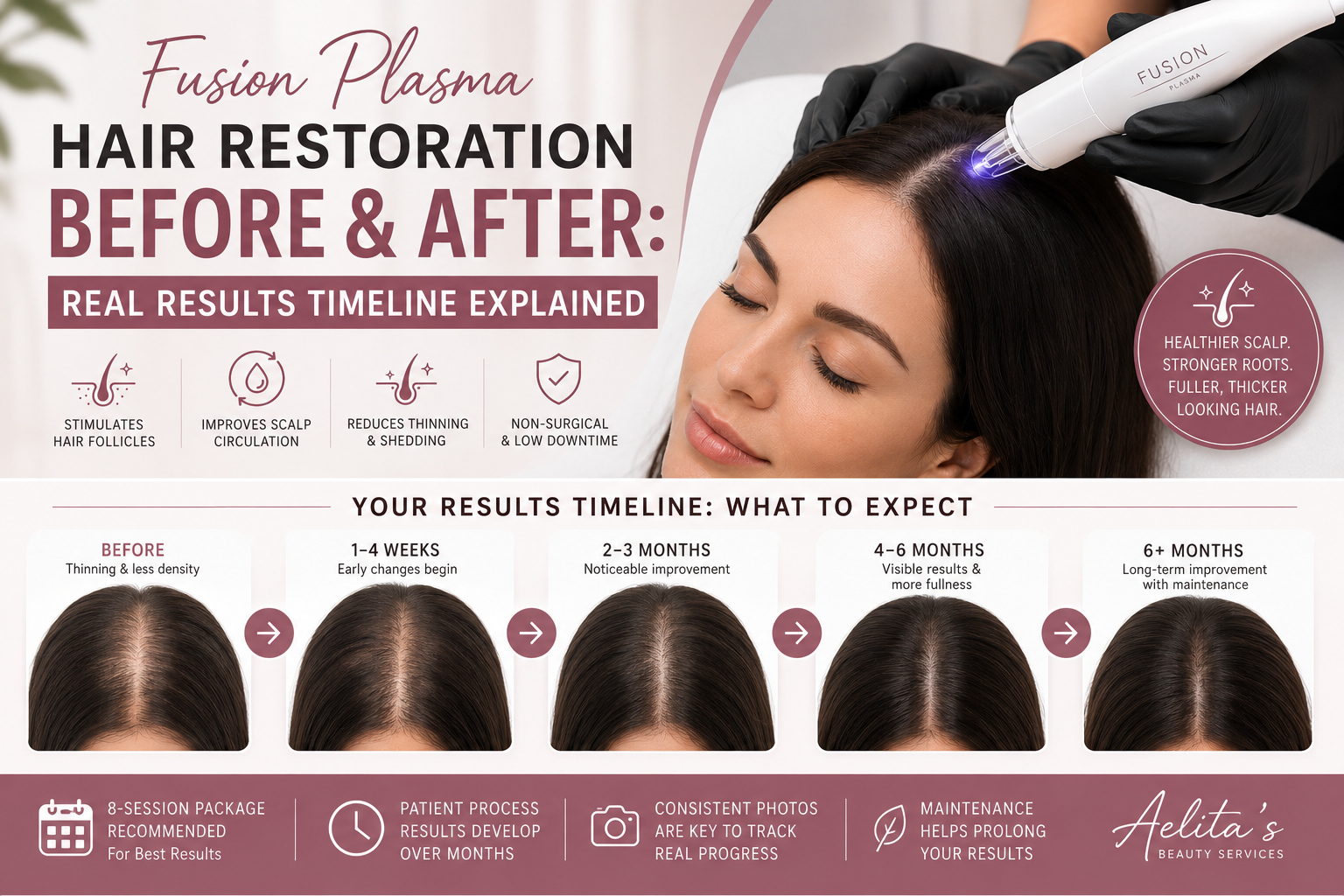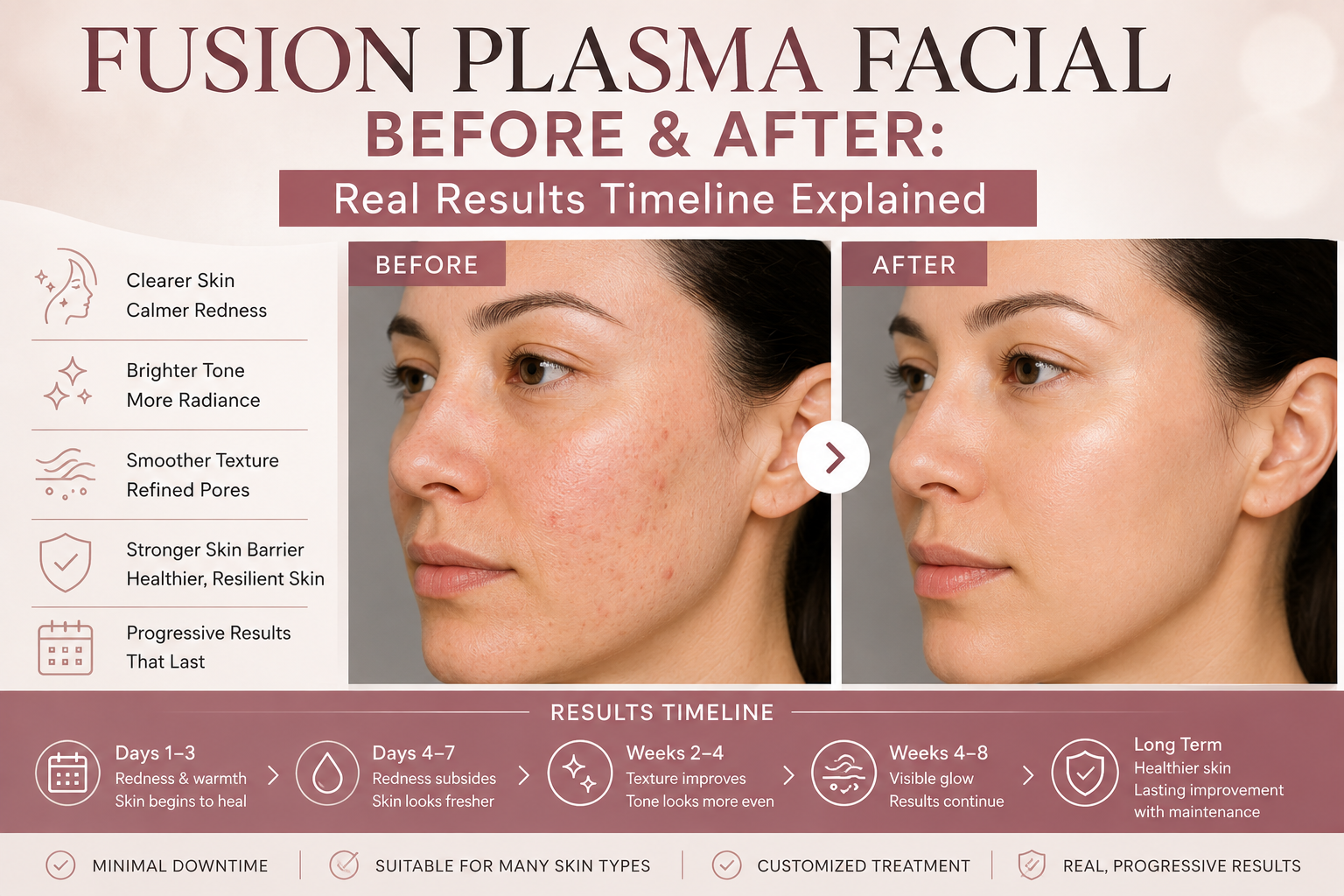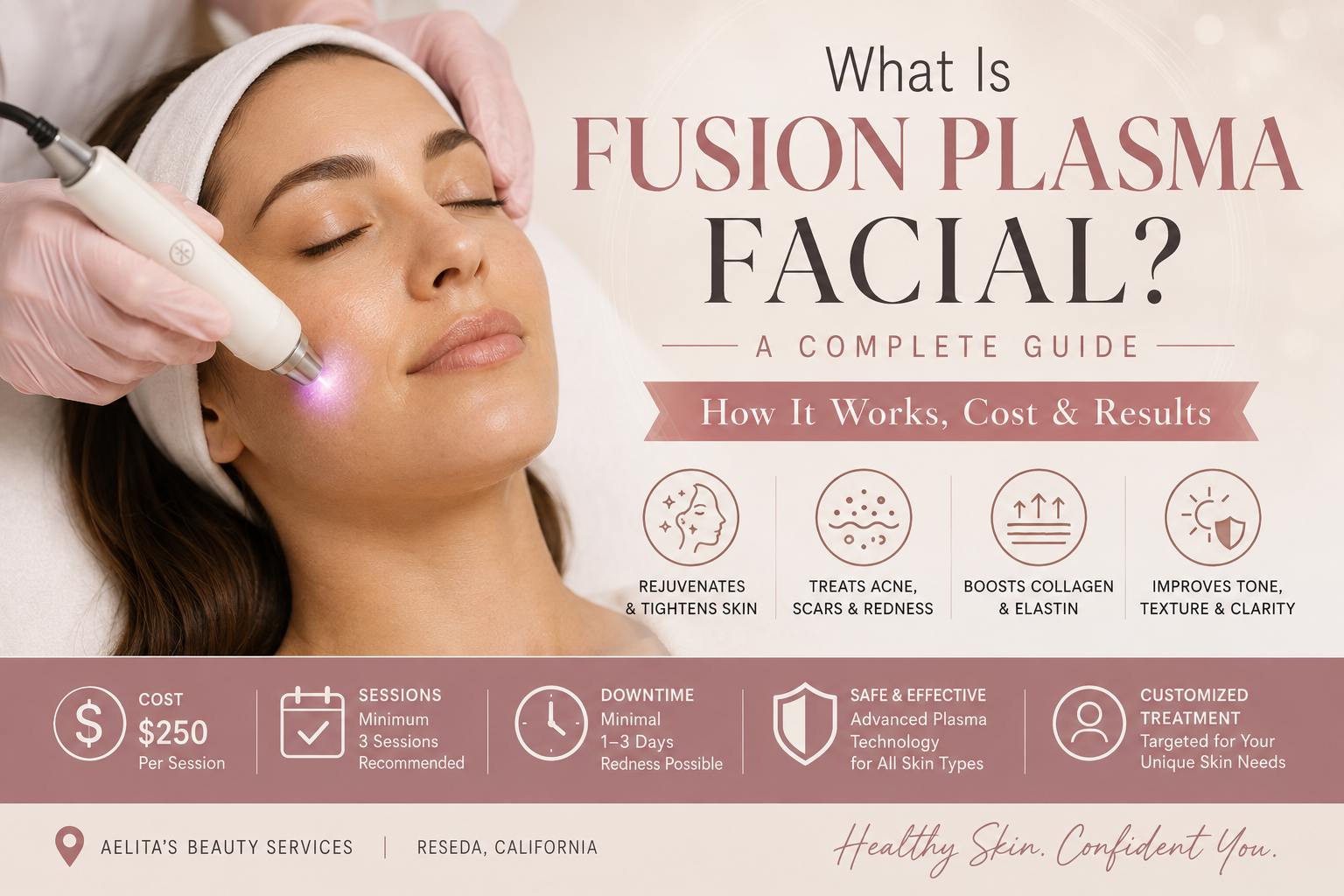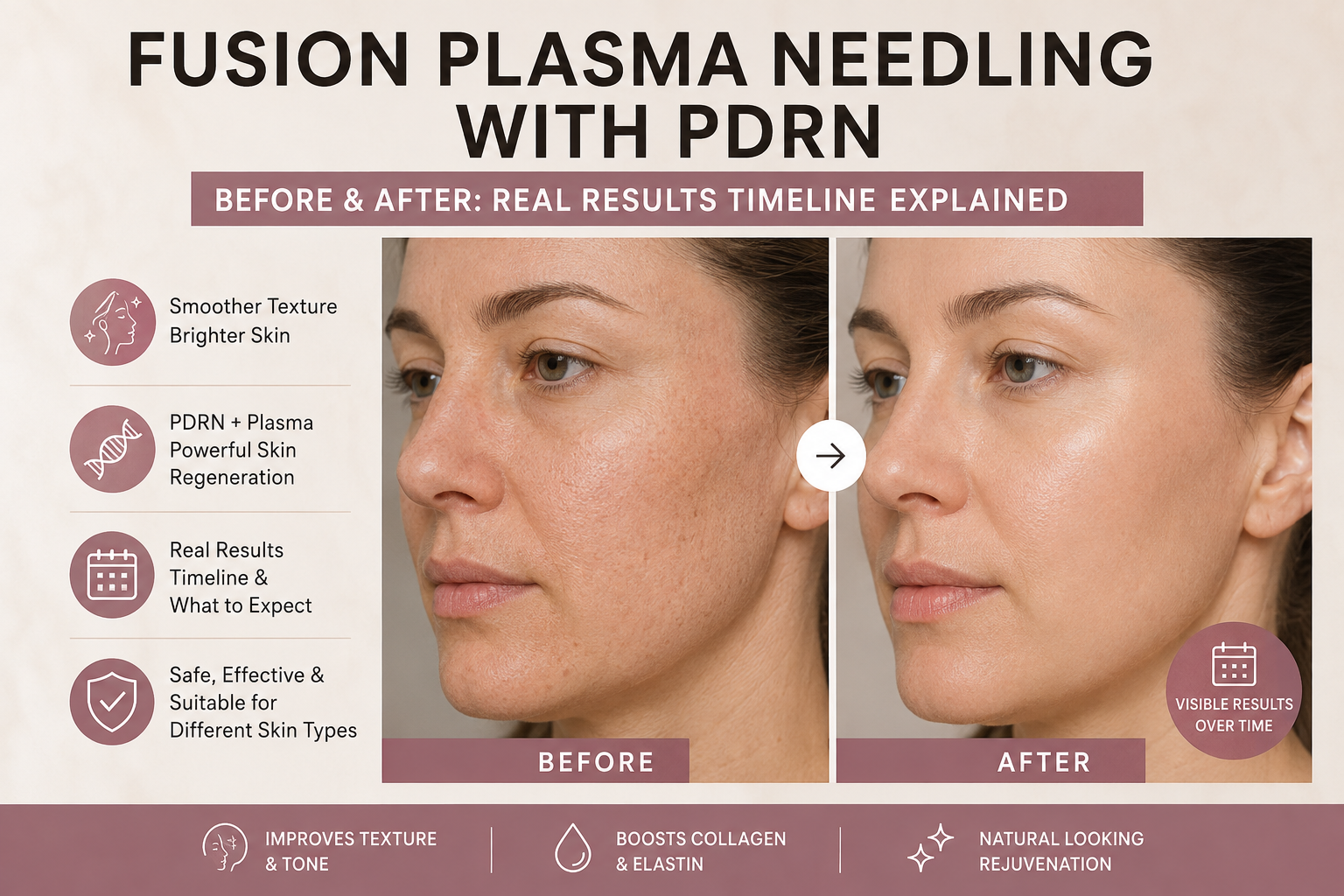
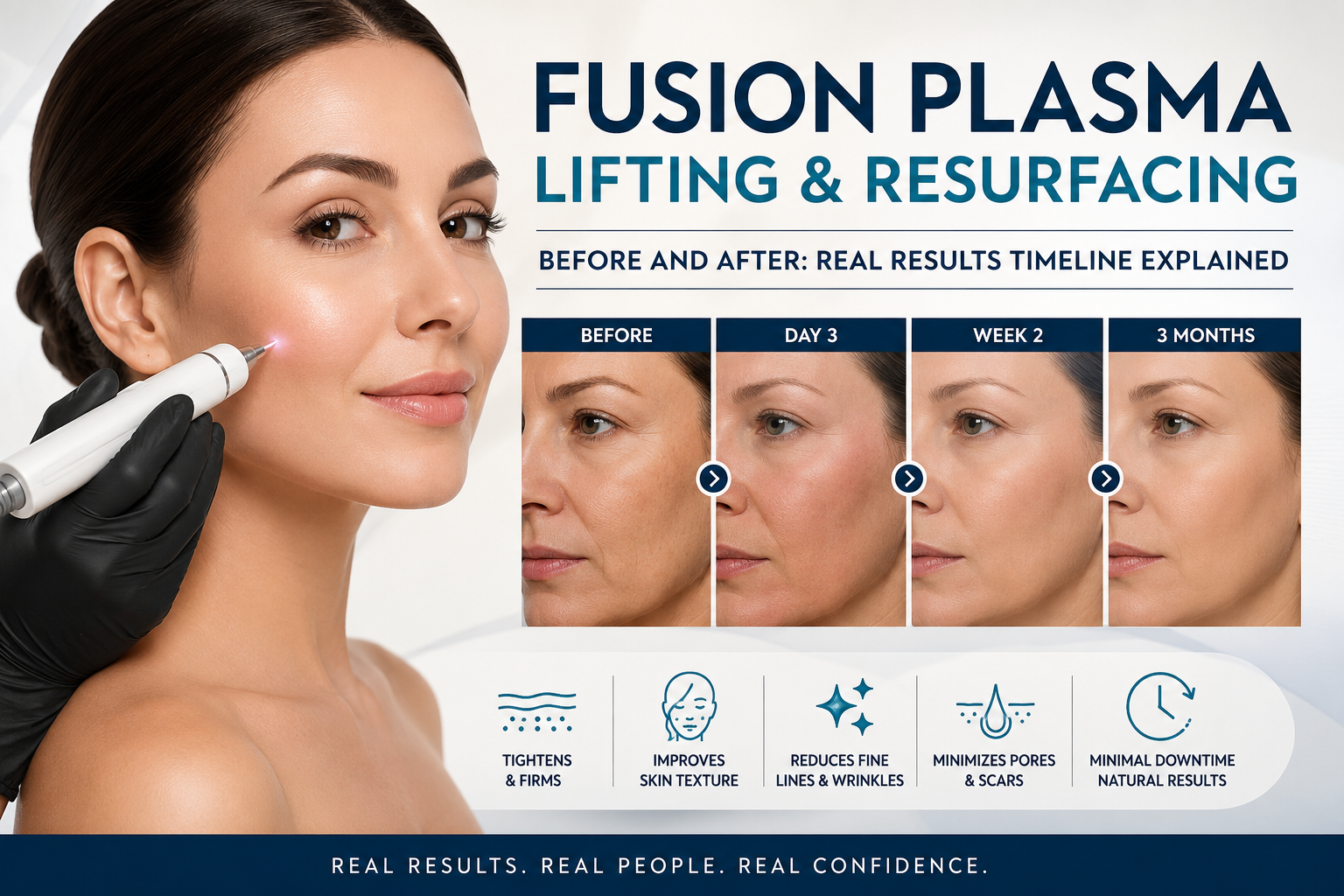
When viewing fusion plasma lifting & resurfacing before and after photos, it is easy to focus only on the final image. What those photos rarely show is the process between treatment day and the finished result: temporary redness, dryness, swelling, gradual skin renewal, and collagen remodeling that may continue for several months.
Fusion Plasma Lifting & Resurfacing is marketed as a nonsurgical skin-rejuvenation treatment designed to improve concerns such as fine lines, mild skin laxity, enlarged-looking pores, uneven texture, dullness, and some types of superficial discoloration. Depending on the device and treatment protocol, the procedure may use thermal plasma, cold atmospheric plasma, or a combination of plasma-based technologies.
However, results are not identical for every patient. The condition being treated, energy settings, practitioner experience, treatment area, healing response, skincare habits, and number of sessions can all influence the outcome.
This guide explains the typical fusion plasma lifting & resurfacing timeline, what before-and-after images can realistically demonstrate, how recovery may progress, and how to decide whether the treatment matches your goals.
What Is Fusion Plasma Lifting & Resurfacing?
Plasma is an ionized gas capable of transferring controlled energy to tissue. In aesthetic treatments, different plasma technologies may be used to create a controlled effect at or near the skin’s surface.
Thermal plasma treatments are generally intended to produce controlled heating that initiates a wound-healing response. This process may encourage epidermal renewal and longer-term collagen remodeling. Cold atmospheric plasma operates at lower temperatures and is being studied for applications involving skin rejuvenation, inflammation, microbial control, and wound healing.
Some systems described as “Fusion Plasma” combine more than one type of plasma application. Because this is not a single standardized treatment protocol, patients should ask for the exact device name, treatment depth, intended indication, and regulatory status before proceeding.
Research into plasma skin regeneration has reported improvements in photodamage, texture, wrinkles, and skin elasticity. However, evidence for one plasma device cannot automatically be applied to every machine marketed under a similar name. Your results should therefore be discussed in relation to the specific equipment and protocol used by your provider.
What Can Before-and-After Photos Show?
High-quality fusion plasma lifting & resurfacing results photos may show improvements in:
Fine lines and crepey-looking skin
Mild looseness around the eyes, cheeks, or lower face
Rough or uneven skin texture
Enlarged-looking pores
Dull or sun-damaged skin
Superficial acne scarring
Overall firmness and radiance
The most meaningful photos are taken under identical conditions. Lighting, camera angle, distance, facial expression, makeup, and skin hydration should remain consistent. Even a small change in lighting can make wrinkles and texture appear dramatically better or worse.
Reliable before-and-after photography should also include the date of each image. A photograph taken three days after treatment does not demonstrate the final result. Depending on the intensity of treatment, the skin may look temporarily swollen, dry, darker, redder, or smoother during early healing.
Patients should be cautious when results photos are heavily filtered, cropped, retouched, or captured with different facial expressions. Ask to see several cases involving people with similar concerns, age ranges, skin tones, and treatment plans.
Fusion Plasma Lifting & Resurfacing Timeline
The exact healing schedule depends on the device, treatment intensity, area treated, and individual response. The following timeline represents a general pattern rather than a guarantee.
Immediately After Treatment
Directly after the procedure, the skin may feel warm, tight, sensitive, or similar to a sunburn. Redness and mild swelling are common. More intensive resurfacing protocols may produce pinpoint crusting, a bronzed appearance, or visible treatment marks.
Some people notice an immediate tightening effect. This can be encouraging, but it should not be mistaken for the final result. Early firmness may be partly related to temporary tissue contraction or swelling.
Your practitioner should provide written fusion plasma lifting & resurfacing aftercare instructions before you leave the clinic.
Days 1–3
Redness, warmth, tenderness, and swelling may be most noticeable during the first few days. Swelling can appear more prominent around the eyes because the skin in this area is thin.
The treated skin may begin to feel dry or rough. Depending on the technique, small dots, flakes, or crusts may develop. Do not scratch, scrub, or remove them prematurely. Picking can increase the risk of infection, prolonged redness, discoloration, and scarring.
Follow the cleansing and moisturizing instructions supplied by your provider. Avoid introducing active products unless they have been approved for use during healing.
Days 4–7
Flaking or crusting may become more visible before it improves. As damaged surface cells shed naturally, fresher-looking skin may begin to appear underneath.
Many patients feel comfortable returning to normal social activities during this stage, although stronger treatment settings may involve a longer visible recovery. Makeup should not be applied until the provider confirms that the skin barrier has healed sufficiently.
Strict sun avoidance remains essential. Newly treated skin may be especially vulnerable to irritation and post-inflammatory hyperpigmentation.
Weeks 2–4
By this point, much of the obvious surface healing may be complete. The skin can appear smoother, brighter, and more even. Fine lines may look softer, and makeup may sit more evenly on the skin.
Some residual pinkness or sensitivity can persist, particularly following an intensive treatment. This is also a period when patients sometimes become impatient because the early improvement appears modest. Plasma resurfacing is not necessarily an instant transformation. Biological remodeling takes time.
Contact your provider if redness is increasing rather than fading or if you develop blistering, worsening pain, unusual discharge, spreading warmth, or other concerning symptoms.
Months 1–3
Collagen remodeling may become more noticeable during the first three months. The skin may gradually feel firmer, and textural improvements may become easier to see in standardized photographs.
For many patients, this is the most useful period for assessing the emerging result. Compare images using the same lighting and facial position rather than relying only on daily mirror checks.
A review appointment may be arranged during this period to determine whether healing is progressing appropriately and whether an additional session would be useful.
Months 3–6
Results may continue to mature for several months. Patients who respond well may notice gradual refinement in texture, mild tightening, and softening of fine lines.
The degree of change should remain realistic. Plasma resurfacing may improve mild to moderate concerns, but it does not reproduce the lifting effect of surgery. It also cannot stop natural aging, restore substantial lost facial volume, or completely erase deep scars and wrinkles.
How Many Sessions of Fusion Plasma Lifting & Resurfacing Are Needed?
A common question is, how many sessions fusion plasma lifting & resurfacing requires. There is no universal number because treatment protocols vary significantly.
Some people with mild texture concerns may be satisfied after one session. Others may need a series of two or three treatments. Lower-intensity procedures are often performed as a course, while more aggressive resurfacing may involve fewer sessions but greater downtime.
The recommended plan may depend on:
The depth and severity of the concern
Whether the goal is resurfacing, tightening, or both
The treatment area
The device and energy settings
The patient’s skin tone and pigmentation risk
Previous aesthetic procedures
Available recovery time
The response to the first session
Additional treatments should not be scheduled before the skin has adequately healed. More energy or more frequent treatment does not automatically create a better result. Excessive treatment may increase the risk of burns, prolonged inflammation, pigment changes, or scarring.
Fusion Plasma Lifting & Resurfacing Recovery
The phrase “minimal downtime” can be misleading because downtime means different things to different people. A person may be medically able to work while still having visible redness, flaking, swelling, or crusting.
Your fusion plasma lifting & resurfacing recovery may be influenced by treatment intensity, the size of the area, and your natural healing response. A light protocol might involve several days of mild redness and dryness. A stronger resurfacing treatment may require a week or longer before the skin looks socially presentable.
Plan around important meetings, weddings, travel, and photography. Do not schedule the procedure immediately before a major event.
You should also avoid comparing your recovery with another patient’s experience. Two people receiving treatments with the same name may have been treated with different devices, applicators, depths, and energy settings.
Essential Aftercare
Good aftercare supports healing and may reduce avoidable complications. Follow your own practitioner’s instructions, as they should take priority over general online advice.
Typical aftercare recommendations may include:
Cleansing with a gentle, approved product
Keeping the treated area appropriately moisturized
Avoiding picking, peeling, or exfoliating
Avoiding retinoids, acids, scrubs, and irritating actives temporarily
Limiting heat, strenuous exercise, saunas, and steam during early recovery
Avoiding swimming until the skin barrier has healed
Using broad-spectrum sunscreen when approved by the provider
Wearing a hat and minimizing direct sun exposure
Avoiding unapproved makeup on broken or crusted skin
Seek medical advice if you develop signs of infection, severe swelling, increasing pain, blistering, persistent open areas, or unexpected changes in pigmentation.
Fusion Plasma Lifting & Resurfacing for Different Skin Types
The appropriate fusion plasma lifting & resurfacing skin type depends on the technology and settings used. Plasma energy does not necessarily interact with skin pigment in the same way as pigment-targeting lasers, but that does not mean every protocol is automatically safe for every skin tone.
Any procedure that creates heat or inflammation can potentially cause post-inflammatory hyperpigmentation or, less commonly, loss of pigment. This risk can be more significant in patients with darker skin tones or a history of pigmentation after acne, burns, or cosmetic procedures.
A qualified provider should evaluate your Fitzpatrick skin type, medical history, tendency to scar, active skin conditions, and recent sun exposure. A conservative approach or test area may be appropriate in higher-risk cases.
Fusion Plasma Lifting & Resurfacing vs. Competitor Treatment Options
A useful fusion plasma lifting & resurfacing vs competitor treatment comparison should focus on your concern rather than which technology sounds most advanced.
Fractional laser resurfacing has a larger body of published evidence and offers adjustable treatment depths, but certain laser types may involve significant downtime and pigmentation considerations.
Radiofrequency microneedling delivers heat through needles beneath the surface. It may be useful for texture, acne scars, and mild laxity but involves puncturing the skin and may require several sessions.
Chemical peels improve surface discoloration and texture at different depths. They do not provide the same mechanism of tissue heating but may be more appropriate for selected pigmentation concerns.
Microneedling creates controlled micro-injuries and is commonly used for texture and superficial scarring. It often requires a treatment series and usually produces less lifting than energy-based procedures.
Surgical lifting remains more effective for significant tissue laxity. Nonsurgical plasma treatments should not be positioned as replacements for a facelift or eyelid surgery when substantial excess skin is present.
Realistic Expectations
Understanding fusion plasma lifting & resurfacing realistic expectations is one of the most important parts of treatment planning.
A successful outcome may mean fresher texture, slightly firmer skin, softer fine lines, and a more even appearance. It should not be assumed that one appointment will remove deep wrinkles, eliminate severe acne scars, permanently tighten loose skin, or create surgical-level lifting.
Results also vary. Some patients experience visible improvement, while others notice only a subtle change. No responsible practitioner can guarantee an exact percentage of tightening or duplicate another patient’s result.
Longevity, Maintenance, and Touch-Ups
Fusion plasma lifting & resurfacing longevity depends on the concern treated, intensity of treatment, age, genetics, sun exposure, smoking, skincare habits, and ongoing aging.
Improvements from collagen remodeling may last for months or longer, but the skin continues to age. Daily sun protection and a suitable skincare routine can help preserve the result.
A fusion plasma lifting & resurfacing maintenance plan might include periodic treatments rather than frequent aggressive procedures. Some patients may consider a fusion plasma lifting & resurfacing touch up after the original result has fully developed or when changes begin to fade.
Touch-ups should be based on clinical assessment, not a fixed sales schedule.
What Is the Best Age for Fusion Plasma Lifting & Resurfacing?
There is no single best age for fusion plasma lifting & resurfacing. Candidacy depends more on skin condition, treatment goals, general health, and healing risk than on a specific birthday.
Younger adults may seek treatment for acne-related texture, pores, or early photodamage. Patients in their 30s to 50s may be interested in fine lines and mild laxity. Older patients may still benefit from resurfacing, but significant loose skin or volume loss may require a different or combined approach.
The best candidate is someone with an appropriate concern, realistic expectations, and no contraindication that makes treatment unsafe.
Fusion Plasma Lifting & Resurfacing FAQ
Is the treatment painful?
Comfort varies with the area and treatment intensity. Patients may feel heat, stinging, or a snapping sensation. Topical numbing may be used when appropriate.
When will I see the final result?
Surface improvements may appear within several weeks, while collagen-related changes may continue developing for three to six months.
Can it remove deep wrinkles?
It may soften some lines, but deep wrinkles often require combination treatment and may not disappear completely.
Is it suitable for acne scars?
It may improve certain superficial textural irregularities. Deep ice-pick, rolling, or tethered scars may require other procedures or a combination plan.
Can I combine it with injectables?
Possibly, but treatment order and timing matter. Your provider should coordinate procedures to reduce unnecessary inflammation and complications.
Who should avoid treatment?
People with active infections, open wounds, uncontrolled medical conditions, impaired healing, or certain skin disorders may not be suitable. Pregnancy, medications, implanted devices, a history of abnormal scarring, and recent procedures should be discussed during consultation.
Final Thoughts
The most trustworthy fusion plasma lifting & resurfacing before and after story is not an overnight transformation. It is a gradual process involving controlled treatment, temporary recovery, surface renewal, and possible collagen remodeling over several months.
Before booking, ask which device will be used, what evidence supports its intended application, who will perform the procedure, what recovery should look like, and how complications are managed. Review unedited photographs of comparable patients and make sure the proposed result aligns with what a nonsurgical treatment can realistically achieve.
With careful patient selection, appropriate settings, qualified treatment, and consistent aftercare, Fusion Plasma Lifting & Resurfacing may provide visible improvements in skin texture, radiance, fine lines, and mild firmness. The goal should be healthier-looking, naturally refreshed skin—not an unrealistic or guaranteed transformation.
Medical disclaimer: This article is for general educational purposes and is not a substitute for diagnosis or individualized medical advice. Plasma devices and treatment protocols vary. Consult a qualified medical professional familiar with the exact technology being offered.