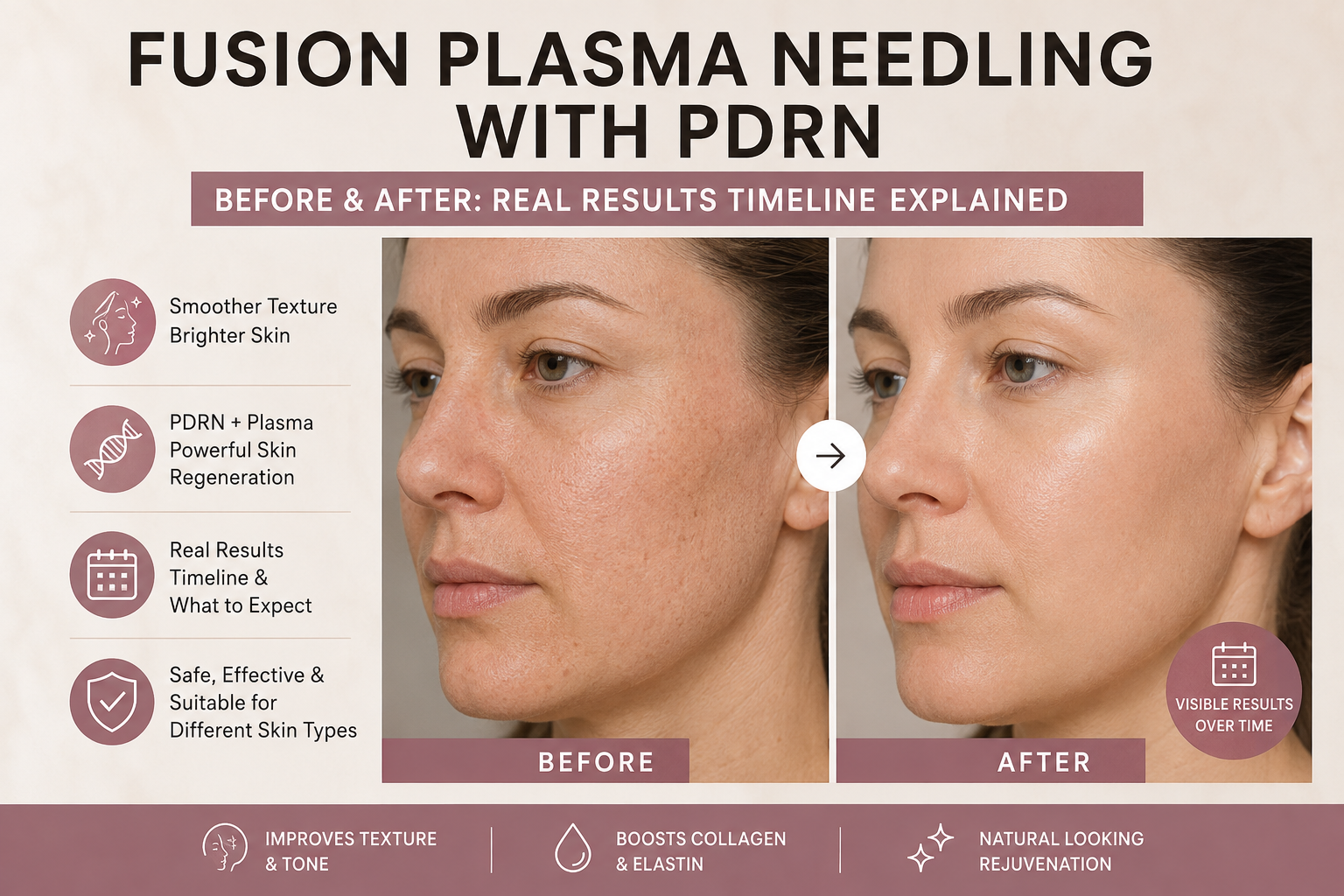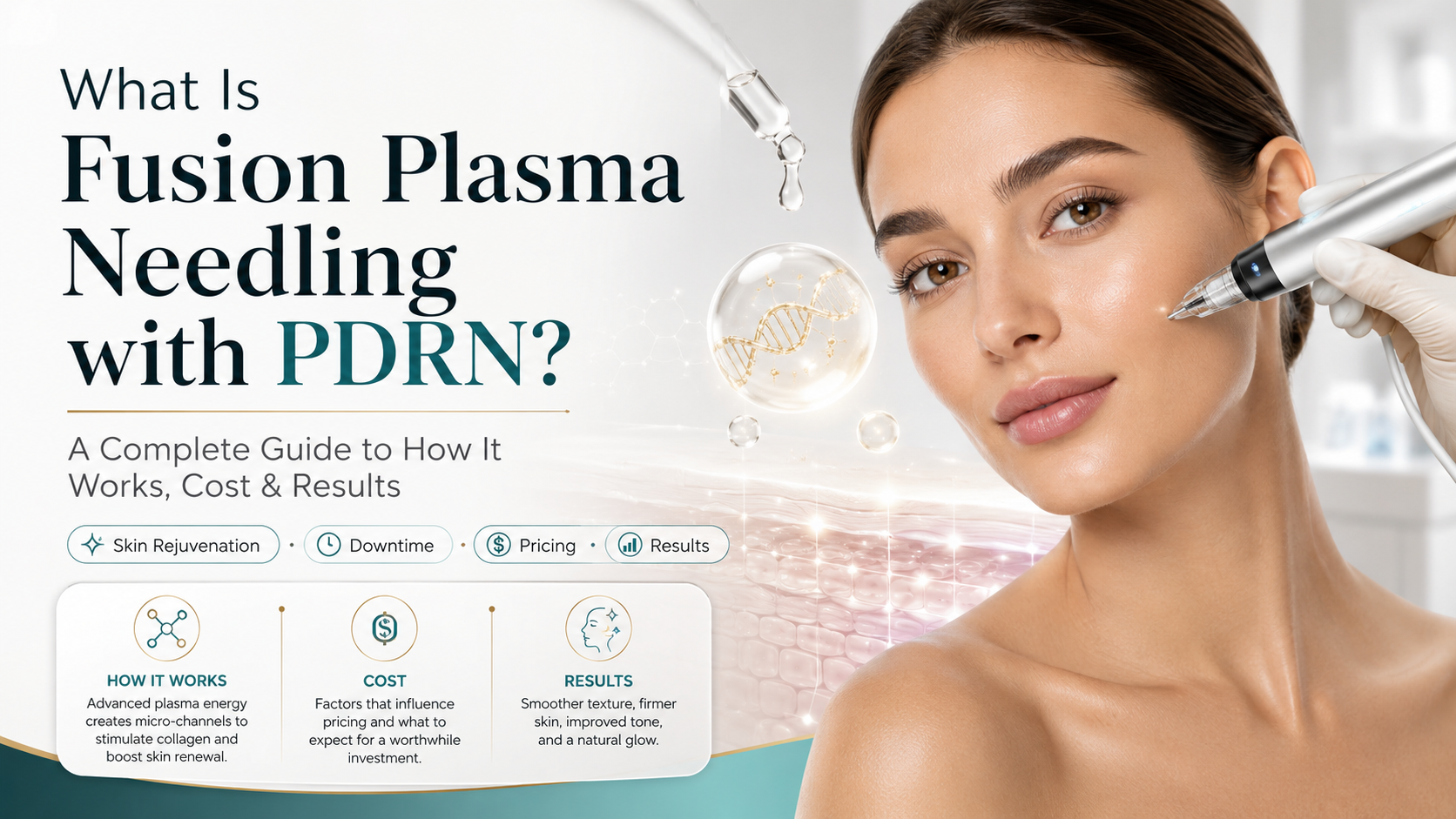
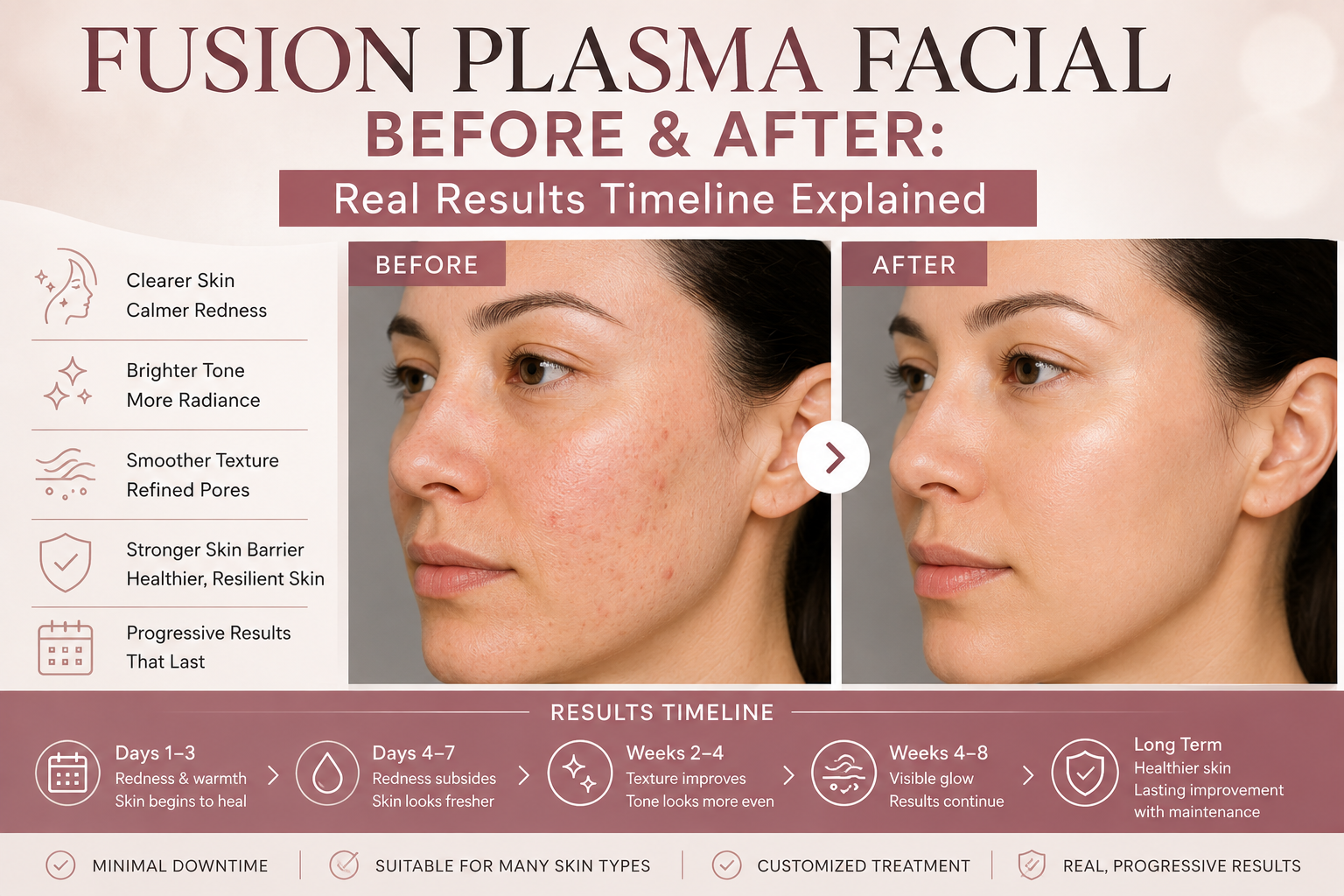
If you are researching Fusion Plasma Facial before and after results, you have probably seen photos promising clearer, smoother and younger-looking skin.
But a photograph rarely tells the whole story.
Was the “after” image taken immediately after treatment, one week later or after a complete course? Was the lighting the same? How many sessions did the client have? What was their skin concern before treatment?
These details matter because Fusion Plasma Facial results are designed to develop progressively rather than produce exactly the same result for everybody.
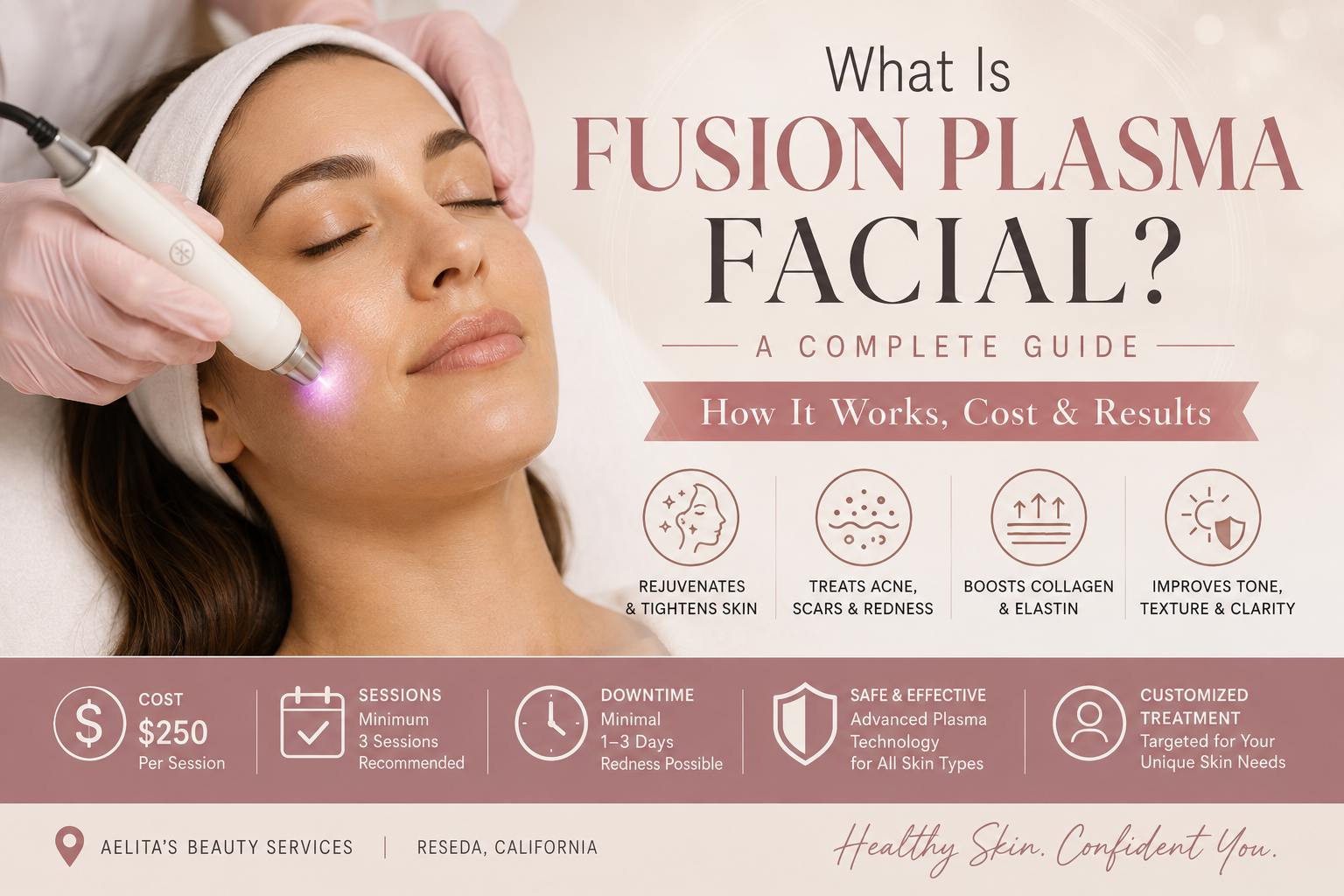
At Aelita’s Beauty Services, the Fusion Plasma Facial is currently positioned for concerns including acne and post-acne inflammation, redness, uneven pigmentation, fine lines, reduced firmness and overall skin barrier support. The service is currently priced at $250, with a minimum of three sessions recommended.
This guide explains the realistic Fusion Plasma Facial timeline, what recovery may look like, when to take results photographs and how to know whether your treatment is progressing as expected.
What Should a Fusion Plasma Facial “Before” Photo Show?
A proper before-and-after comparison starts before the treatment itself.
Your baseline photograph should show your skin as naturally as possible. Ideally, photographs should be taken:
In consistent lighting
Without beauty filters
From the same distance
From matching facial angles
With the same facial expression
Without heavy make-up hiding the skin
Using the same camera where possible
The goal is not to make the “before” photograph look deliberately unflattering. It is to create an honest baseline.
Useful Fusion Plasma Facial results photos may help document changes in visible redness, uneven tone, texture, post-breakout appearance, fine lines and general skin clarity.
Aelita’s current service description specifically positions the treatment as supporting clearer, calmer and more even-looking skin over time.
That phrase — over time — is important.
Fusion Plasma Facial Timeline: What Happens After Treatment?
There is no single timeline that applies perfectly to every person. Treatment intensity, skin sensitivity, baseline condition, lifestyle and aftercare can all affect recovery and visible results.
However, the following Fusion Plasma Facial timeline gives you a practical idea of what the process may look like.
Immediately After Treatment
Immediately after your appointment, your skin may not look like the polished “after” photograph you have in mind.
Temporary redness, warmth, tightness or sensitivity may occur. Depending on the treatment settings, small temporary treatment marks may also be visible.
Aelita’s broader Fusion Plasma guidance describes mild warmth during treatment and notes that small dots can sometimes appear and settle over the following days.
An immediate photograph should therefore be viewed as a recovery reference rather than evidence of the final result.
Some people may notice an early refreshed or tighter-looking appearance, but this should not be confused with the final outcome.
Days 1–3: Early Fusion Plasma Facial Recovery
The first few days are primarily about allowing the skin to settle.
Your complexion may temporarily appear pink, dry or slightly sensitive. Some clients may feel tightness or notice small treatment marks.
This is not usually the best point to judge whether the treatment has “worked”.
During Fusion Plasma Facial recovery, avoid trying to speed up the process by scrubbing, picking or introducing strong skincare ingredients unless specifically advised by your practitioner.
Your skin has just undergone an advanced professional treatment. Gentle care is generally more appropriate during the early recovery stage.
Days 4–7: Skin Starts to Settle
As the first week progresses, temporary redness and sensitivity should begin settling for many clients.
This is often when the complexion becomes easier to assess.
You may start to notice that the skin looks:
Fresher
Smoother
More balanced
Less dull
More even in appearance
Aelita’s existing Fusion Plasma information describes the results as progressive, meaning improvements can continue developing after the initial recovery period.
A one-week photograph can therefore be useful, but it still should not necessarily be considered your final “after”.
Weeks 2–4: Early Results Become Clearer
By weeks two to four, the treatment itself is further behind you and you can start evaluating your skin without as much interference from temporary post-treatment effects.
Depending on your starting concern, you may begin noticing improvements in overall clarity, texture, tone or the appearance of redness.
If your goal is improved skin quality rather than an instant cosmetic change, this period is much more informative than the first 24 hours.
Clients following a course of treatments may also be approaching the stage when their practitioner evaluates whether another session is appropriate.
Weeks 4–8: Cumulative Changes Matter More
This stage becomes particularly important for clients completing multiple sessions.
A single Fusion Plasma Facial may provide a refreshing effect, but Aelita currently recommends a minimum of three sessions, indicating that the service is designed around cumulative treatment rather than relying exclusively on one appointment.
Your practitioner can compare progress with your original baseline and determine whether your skin is responding as expected.
Improvements may not occur equally across every concern. For example, overall radiance might become noticeable before more established textural or pigmentation concerns appear significantly different.
Months 2–3: A Better Before-and-After Comparison
For many skin-renewal treatments, later photographs are more meaningful than immediate ones.
By this stage, someone who has followed an appropriate treatment programme may have a clearer picture of changes in:
Skin texture
Overall brightness
Uneven-looking tone
Post-breakout appearance
Fine lines
Firmness
General skin clarity
This is where well-documented before-and-after photographs become useful.
The objective should be visible improvement in your own skin rather than achieving somebody else’s result.
How Many Sessions of Fusion Plasma Facial Are Needed?
One of the most common questions is how many sessions Fusion Plasma Facial treatment requires.
Aelita’s dedicated Fusion Plasma Facial service page currently recommends a minimum of three sessions.
That does not mean exactly three sessions will be ideal for everyone.
Someone primarily looking for a general refresh may have different needs from somebody dealing with persistent uneven-looking tone, post-breakout concerns or visible signs of ageing.
Your treatment programme should consider:
Your starting skin condition
Your main concerns
Your skin sensitivity
Previous treatments
How quickly your skin recovers
How your skin responds between sessions
The safest approach is to reassess progress rather than assuming that more sessions automatically mean better results.
Fusion Plasma Facial Realistic Expectations
Setting Fusion Plasma Facial realistic expectations is one of the most important parts of treatment planning.
The Facial may be considered for improving the appearance of skin quality, but it does not replace cosmetic surgery, injectable treatments or medical dermatology.
Realistic goals may include:
Smoother-looking skin
A clearer-looking complexion
Improved radiance
More even-looking tone
A reduction in the appearance of post-breakout redness
Softer-looking fine lines
Firmer-looking skin
Improved overall skin balance
Aelita currently describes the treatment as targeting active acne and post-acne inflammation, redness, pigmentation, signs of ageing and overall skin resilience.
However, an aesthetic treatment should not be presented as a cure for medical conditions such as rosacea or psoriasis. Clients with diagnosed inflammatory skin conditions should seek appropriate medical guidance where necessary.
Individual response will always vary.
Which Skin Types May Be Suitable?
There is no simple answer to the Fusion Plasma Facial skin type question because suitability involves more than whether your skin is oily, dry or combination.
Your practitioner should also consider:
Current sensitivity
Active inflammation
Pigmentation tendency
Skin barrier condition
Recent sun exposure
Current skincare products
Recent professional treatments
Relevant health conditions or medication
People prone to pigmentation after inflammation may require particularly careful assessment when considering energy-based skin treatments.
The best treatment settings should therefore be based on your skin rather than copied from another client's treatment.
A consultation is more useful than choosing a facial solely because someone with apparently similar skin achieved a good result.
Fusion Plasma Facial Aftercare: Protecting Your Results
Your Fusion Plasma Facial aftercare can influence how comfortably your skin recovers.
Follow the personalised instructions supplied by your practitioner first, as your aftercare should reflect the treatment intensity and your skin response.
During the early recovery period, it is sensible to avoid unnecessarily irritating the skin.
That may include temporarily limiting aggressive exfoliation, strong acids, retinoids, scrubs and other potentially sensitising products until your practitioner advises that they can be restarted.
Do not pick at temporary treatment marks or peeling skin.
Sun protection is also particularly important when your goal is improving uneven-looking tone and supporting long-term skin quality.
If your skin develops symptoms that feel unusual or more severe than the recovery pattern explained during your appointment, contact your practitioner.
Fusion Plasma Facial Longevity: How Long Can Results Last?
There is no responsible way to promise exactly how many months every client's results will last.
Fusion Plasma Facial longevity can be influenced by:
Age
Genetics
Sun exposure
Skincare
Smoking
Lifestyle
Baseline skin condition
Number of treatments
Maintenance programme
Aelita's current service page does not promise a fixed duration for results, which is appropriate because individual outcomes differ.
Skin also continues to age after treatment.
Rather than thinking of the Facial as creating a permanent result, it is more helpful to view it as part of an ongoing approach to maintaining skin quality.
Fusion Plasma Facial Maintenance and Touch-Ups
After completing your initial course, Fusion Plasma Facial maintenance should depend on what your skin needs.
There is no benefit in scheduling unnecessary treatment simply because a certain date has arrived.
A Fusion Plasma Facial touch up may be considered when improvements begin to soften, new concerns develop or your practitioner believes another session could support your skincare goals.
Maintenance can also work alongside a consistent home routine and appropriate professional treatments.
Ask your practitioner to evaluate your skin before deciding on the frequency.
What Is the Best Age for Fusion Plasma Facial Treatment?
There is no universal best age for Fusion Plasma Facial treatment.
A client in their twenties may be interested in breakouts, post-acne redness or uneven-looking skin.
Someone in their thirties or forties may be more concerned with fine lines, dullness or early firmness changes.
A more mature client may focus on overall texture, tone and skin quality.
The deciding factor should therefore be your skin concern and suitability — not simply your age.
Fusion Plasma Facial vs Competitor Treatment Options
When researching Fusion Plasma Facial vs competitor treatment options, compare the purpose of each treatment rather than searching for one universal winner.
Treatment | Approach | Common Cosmetic Goal |
|---|---|---|
Fusion Plasma Facial | Plasma-based facial treatment | Multi-concern skin renewal, tone, texture and clarity |
Chemical Peel | Controlled chemical exfoliation | Surface dullness, pigmentation and uneven texture |
Microdermabrasion | Mechanical exfoliation | Smoother surface texture and brighter-looking skin |
LED Therapy | Light-based treatment | Supportive treatment for acne-prone skin and recovery |
Fusion Plasma Needling with PDRN | Needling plus PDRN protocol | More repair-focused skin rejuvenation |
Aelita offers the Fusion Plasma Facial, microdermabrasion, LED-based therapy and Fusion Plasma Needling with PDRN as separate services, allowing treatment choice to be based on the client's specific concerns.
If your main concern is surface dullness, one option may suit you better. If you want broader rejuvenation or are dealing with multiple concerns, another approach may be more appropriate.
Fusion Plasma Facial FAQ
Can You See Results After One Fusion Plasma Facial?
Some clients may notice fresher or smoother-looking skin after one appointment, but Aelita currently recommends a minimum course of three sessions.
When Should I Take Fusion Plasma Facial Results Photos?
Take a baseline photograph before treatment and consider additional photographs around one week, four weeks and later in your treatment course. Keep the lighting, camera distance and angle consistent.
Is Redness Normal After Treatment?
Temporary redness, warmth, sensitivity or small treatment marks may occur after plasma treatment. Aelita's existing guidance describes these as temporary effects that can settle over the following days.
How Much Does a Fusion Plasma Facial Cost?
Aelita's Beauty Services currently lists the Fusion Plasma Facial at $250 per session.
How Many Treatments Should I Have?
Aelita currently recommends at least three sessions, although your individual programme should depend on your goals and response.
Are Fusion Plasma Facial Before-and-After Photos Guaranteed Results?
No. Before-and-after photographs document another person's experience. Your own response can vary according to your skin, treatment settings, number of sessions, recovery and aftercare.
Can I Combine the Facial with Other Treatments?
Potential combinations or treatment sequences should be planned by your practitioner. Having several advanced treatments too close together is not automatically better and may increase irritation.
Final Thoughts on Fusion Plasma Facial Before and After Results
The most useful Fusion Plasma Facial before and after comparison is not a dramatic photograph taken under different lighting. It is a consistent record of how your own skin changes from baseline through recovery and across an appropriate treatment course.
At Aelita’s Beauty Services in Reseda, California, the Fusion Plasma Facial is currently $250, with a minimum of three sessions recommended. The treatment is positioned for clients seeking improvements in concerns such as acne-prone skin, redness, pigmentation, fine lines, firmness and overall skin balance.
If you are considering the treatment, focus on realistic progress: healthier-looking texture, improved clarity, more even-looking tone and a complexion that still looks naturally yours.
Good results should not need filters, exaggerated promises or impossible expectations.
They should simply look like your skin — improved.