Hair thinning can be frustrating because there is rarely one cause or one universal solution. Genetics, hormones, stress, illness, nutrition, scalp health and styling habits can all play a part. That is why more people looking for non-surgical options are asking about Fusion Plasma Hair Restoration.
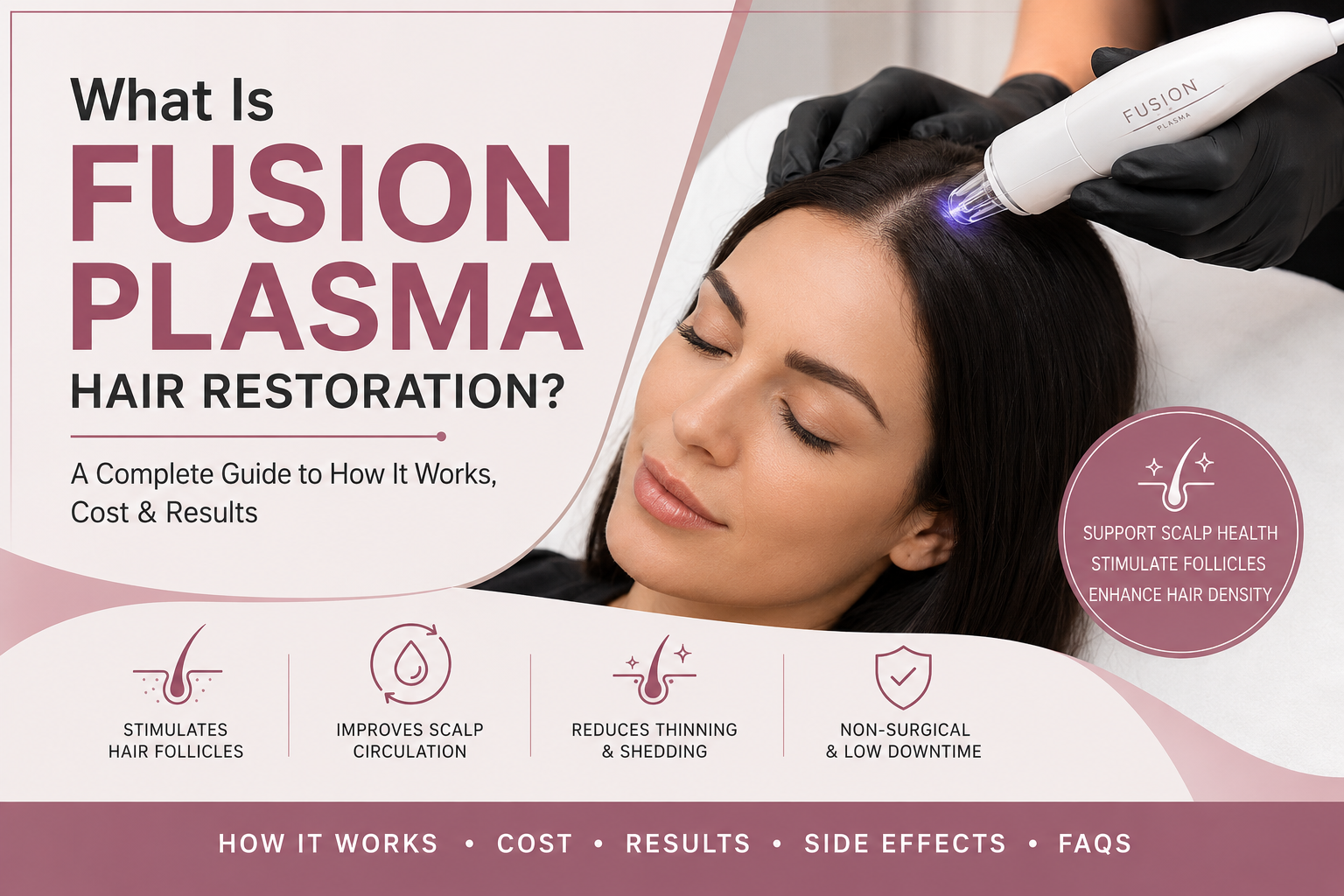
Fusion Plasma Hair Restoration is an aesthetic scalp treatment using plasma-based energy to support the scalp environment and areas affected by thinning. At Aelita’s Beauty Services in Reseda, Los Angeles, it is offered for clients seeking stronger, fuller-looking hair without surgery or injections.
This fusion plasma hair restoration guide covers how the treatment works, potential benefits, cost, downtime, pain level, side effects, results and comparisons with other approaches. It also explains when hair loss should be assessed by a dermatologist.
What Is Fusion Plasma Hair Restoration?
Fusion Plasma Hair Restoration is a non-surgical treatment that applies plasma energy to the scalp. Plasma is an ionised gas. In aesthetic and dermatological research, non-thermal or cold atmospheric plasma is being studied for its effects on skin, cells and hair-follicle biology.
Early research is promising, but this is still an emerging area. A 2021 study found that non-thermal atmospheric pressure plasma activated signalling associated with hair growth in human dermal papilla cells and increased hair growth in a mouse model. A small 2020 pilot study of indirect cold plasma for androgenetic alopecia found the approach was well tolerated, although larger trials were needed to establish effectiveness. A 2025 non-randomised controlled study also investigated a cold atmospheric plasma device for hair growth.
At Aelita’s Beauty Services, Fusion Plasma Hair Restoration is positioned as a scalp-stimulating treatment intended to support circulation, follicle activity, healthier-looking roots and scalp balance. The aim is not to transplant new follicles or provide a medical cure for hair loss, but to support the environment around existing follicles.
How Does Fusion Plasma Hair Restoration Work?
The treatment focuses on the scalp rather than the hair shaft. Controlled plasma energy is delivered across areas of thinning.
Research suggests possible effects on dermal papilla cells and Wnt/β-catenin signalling, a pathway involved in follicle activity. However, laboratory findings should not be treated as a guarantee of visible regrowth.
A typical appointment may involve a scalp assessment, preparation of the area, controlled application of plasma energy and aftercare advice. Because hair grows in cycles, it is more realistic to judge progress over time than to expect dramatic density immediately after one appointment.
Fusion Plasma Hair Restoration Benefits
Potential fusion plasma hair restoration benefits may include:
Supporting a healthier scalp environment
Stimulating existing hair follicles
Supporting scalp circulation and oxygenation
Helping reduce the appearance of thinning
Encouraging stronger, healthier-looking roots
Supporting fuller-looking hair density
Improving overall scalp balance
Aelita’s current service page lists follicle stimulation, reduced thinning and shedding, increased scalp circulation and oxygenation, stronger roots, fuller-looking hair and improved scalp health among the treatment goals.
These are supportive aesthetic benefits, not guaranteed outcomes. Hair loss caused by autoimmune disease, scarring alopecia, thyroid problems, nutritional deficiencies, infection or other medical conditions may require diagnosis and treatment by a dermatologist or another medical professional.
Who Is a Good Candidate?
Fusion plasma hair restoration candidates are generally people experiencing gradual thinning who still have active follicles and want a non-surgical scalp treatment.
You may be a suitable candidate if you have noticed reduced-looking density, want to support scalp health, prefer a treatment without injections, have realistic expectations and can commit to a recommended course of sessions.
Unexplained or sudden hair loss should not simply be treated cosmetically. The American Academy of Dermatology notes that hair loss may be associated with disease, vitamin deficiency, hormonal imbalance or infection, while sudden round or oval bald patches can be a sign of alopecia areata.
If your hair loss is rapid, patchy, painful, accompanied by redness, scaling, sores or scarring, or you do not know why it is happening, see a dermatologist first.
What Happens During an Appointment?
Your appointment should begin with a conversation about your concerns, hair-loss pattern, scalp condition and goals. An esthetician offering Fusion Plasma Hair Restoration can assess cosmetic scalp concerns and explain the treatment, but an esthetician does not replace a dermatologist for diagnosing medical causes of hair loss.
During the treatment, the plasma device is passed over targeted areas according to the provider’s protocol. Afterwards, you should receive guidance on scalp care and what to avoid while the area settles.
Fusion Plasma Hair Restoration Pain Level and Downtime
The fusion plasma hair restoration pain level is generally expected to be low, although comfort varies by person, device settings and treatment area. You may notice warmth, tingling or temporary scalp sensitivity.
Fusion plasma hair restoration downtime is also typically limited compared with surgery. Many people can return to normal daily activities quickly, although temporary redness, tenderness or dryness may occur.
Your practitioner should explain what is normal for the specific system being used. Persistent pain, blistering, signs of infection or another unexpected reaction should be professionally assessed.
Is Fusion Plasma Hair Restoration Safe?
Is fusion plasma hair restoration safe? Early research on cold or non-thermal plasma has shown encouraging tolerability. In a 2020 pilot study involving 14 people with androgenetic alopecia, indirect cold plasma treatment was well tolerated over three to six months, although the study was not designed to prove effectiveness.
That does not mean every plasma device, protocol or client has the same risk profile. Safety depends on the technology used, practitioner training, scalp condition and medical history. Tell your practitioner about medicines, active scalp conditions, recent procedures and relevant health issues. If the cause of your hair loss is unclear, obtain a medical assessment first.
Fusion Plasma Hair Restoration Side Effects
Possible fusion plasma hair restoration side effects are usually expected to be temporary and localised. Depending on the system used, they may include mild redness, tenderness, warmth, tingling, dryness or irritation.
A consultation matters because an inflamed or compromised scalp may respond differently. Active infections, open lesions or unexplained inflammatory scalp problems should be assessed before elective aesthetic treatment.
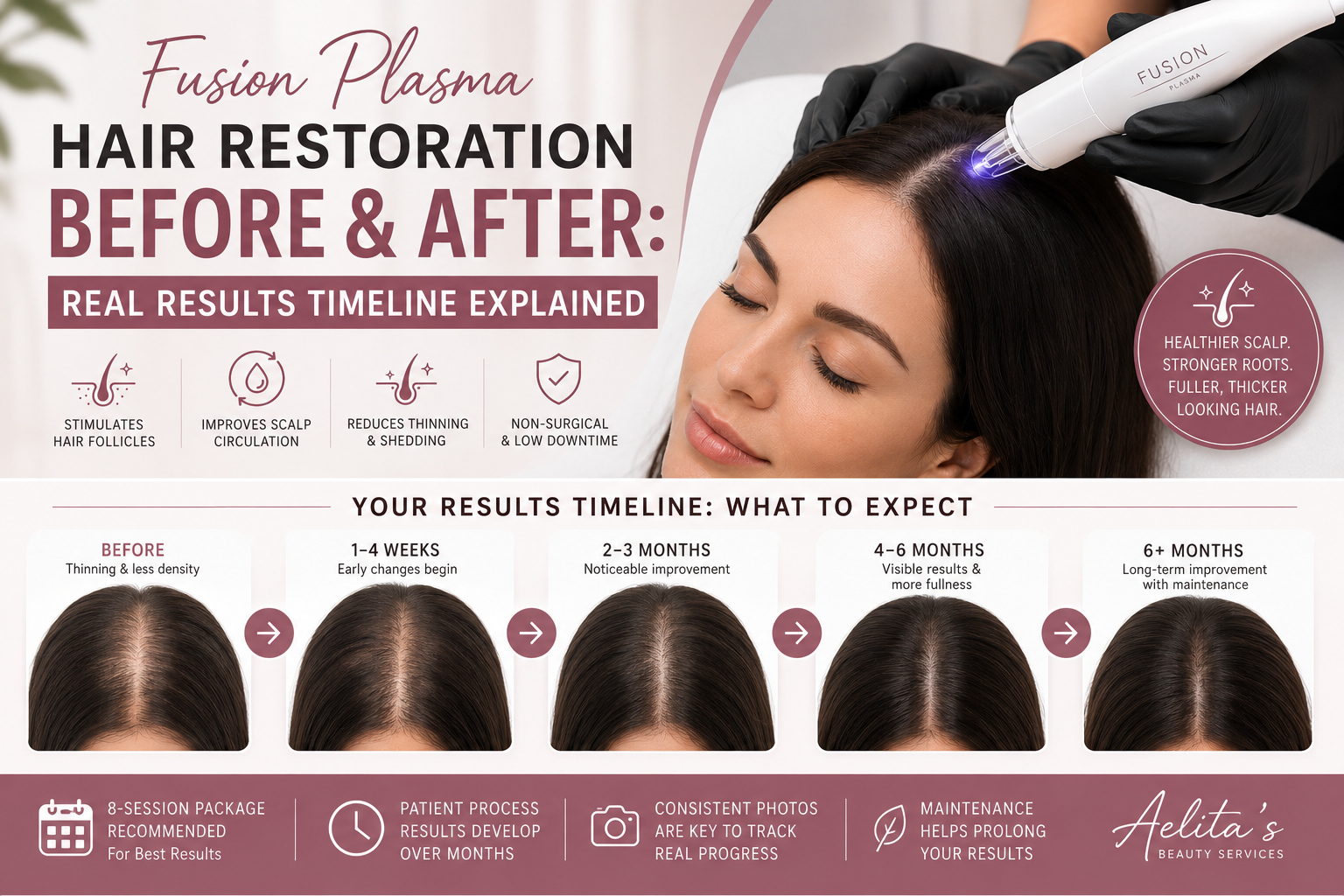
Fusion Plasma Hair Restoration Before and After: What Results Can You Expect?
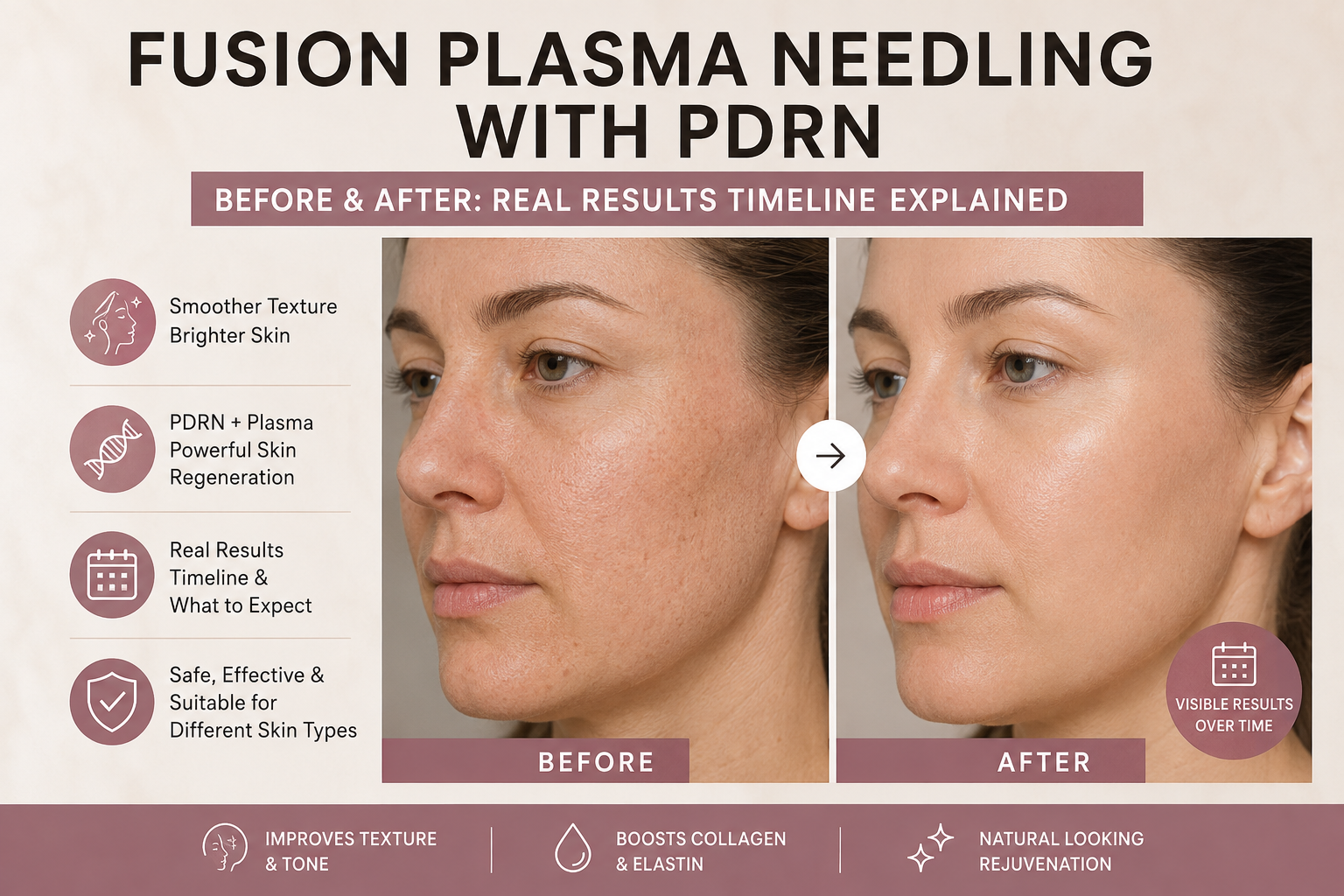
When assessing fusion plasma hair restoration before and after photos, look for consistent lighting, angles, hairstyle, hair length and scalp exposure. These details make comparisons more useful.
Possible improvements may include less visible scalp in thinning areas, stronger-looking hair or better overall density. Results vary because causes of hair thinning vary.
The scientific evidence for cold atmospheric plasma and hair growth is still developing. Early laboratory, animal and small human studies are encouraging, but Fusion Plasma should not be presented as a guaranteed way to regrow lost hair. Existing follicles, cause and duration of thinning, health, hormones and treatment consistency can all influence the outcome.
Fusion Plasma Hair Restoration Results: How Long Do They Take and Last?
If you are searching “fusion plasma hair restoration results how long”, there are two separate questions: when might you notice a change, and how long might that change last?
Hair growth is slow, so meaningful changes should be assessed over months rather than days. Some people may notice changes in shedding or scalp condition before visible density. How long results last is also individual. If the underlying cause of thinning continues, maintenance may be needed.
Fusion Plasma is therefore better viewed as part of an ongoing scalp and hair strategy than as a one-off permanent fix.
How Often Should You Have Fusion Plasma Hair Restoration?
There is no universal answer to how often Fusion Plasma Hair Restoration should be performed because protocols vary by device, scalp condition and treatment goals.
Aelita’s Beauty Services currently references a package of eight sessions on its Fusion Plasma Hair Restoration service page. Your practitioner should advise how those sessions are spaced and whether maintenance is appropriate after reviewing your scalp and response.
Fusion Plasma Hair Restoration Cost
The fusion plasma hair restoration cost at Aelita’s Beauty Services is currently listed as $175. The service page also references a package of eight sessions, so confirm current package pricing and inclusions when booking.
When comparing providers, ask what device is used, who performs the treatment, how many sessions are recommended and what follow-up is provided.
Fusion Plasma Hair Restoration vs Other Treatments
Fusion plasma hair restoration vs other treatments depends on the cause of hair loss and how intensive a treatment you want.
Option | What it involves | Invasiveness | Key consideration |
|---|---|---|---|
Fusion Plasma | Plasma-based scalp treatment | Non-surgical | Emerging approach focused on scalp and existing follicles |
PRP | Platelet-rich plasma from your blood is injected into the scalp | Injections | Used for some forms of pattern hair loss; maintenance may be needed |
Hair-loss medication | Topical or oral treatment selected for the diagnosis | No procedure | Usually requires consistent use and medical guidance where appropriate |
Hair transplant | Follicles are moved surgically from a donor area | Surgical | Greater cost and recovery, but transplanted follicles can provide lasting coverage |
The American Academy of Dermatology notes that treatment should be matched to the type and cause of hair loss; options for pattern hair loss can include medication, PRP and hair transplantation. A dermatologist can help determine which approach makes sense if thinning is significant or progressive.
What Do Fusion Plasma Hair Restoration Reviews Tell You?
Fusion plasma hair restoration reviews can help you understand comfort and service quality, but they are not clinical evidence. Results are difficult to compare because every client starts with a different cause and density.
Aelita’s service page currently shows no customer reviews for this specific treatment. That makes clear expectations, consultation and consistent progress photography especially important.
Looking for Fusion Plasma Hair Restoration Near Me in Los Angeles?
If you are searching “fusion plasma hair restoration near me” in Los Angeles, Aelita’s Beauty Services offers the treatment in Reseda at 19539 Ingomar Street, Reseda, CA 91335.
Aelita has been a licensed esthetician since 2014 and works with advanced aesthetic treatments and personalised beauty care. The clinic’s current Fusion Plasma Hair Restoration service is listed at $175.
Before booking, discuss how long your thinning has been present. If hair loss is sudden, patchy or associated with scalp symptoms, seek dermatological advice first.
Frequently Asked Questions
Can Fusion Plasma restore completely bald areas?
It should not be promised to recreate follicles that are no longer viable. Fusion Plasma is better discussed as a treatment intended to support the scalp and existing follicles. Advanced or permanent hair loss may require medical or surgical assessment.
Does Fusion Plasma Hair Restoration use needles?
The plasma treatment itself is non-surgical and is applied using a device rather than by transplanting hair. Ask your provider exactly what is included in your protocol.
Can an esthetician perform Fusion Plasma Hair Restoration?
A trained, licensed professional may provide aesthetic scalp treatments within the scope permitted locally. An esthetician does not diagnose medical hair-loss conditions, so suspicious or unexplained hair loss should be referred to a medical professional.
Is one session enough?
Hair restoration is rarely a one-session process. Aelita’s service page references an eight-session package, and the schedule should be personalised to your scalp, goals and response.
Is Fusion Plasma better than PRP?
Neither is automatically better. Fusion Plasma is non-surgical and avoids blood draws and scalp injections, while PRP is an injection-based treatment used in dermatology. Your diagnosis, preferences, budget and tolerance for procedures should guide the choice.
Final Thoughts
Fusion Plasma Hair Restoration is an emerging non-surgical option for people who want to support scalp health and improve the appearance of thinning hair. Its appeal lies in its non-surgical approach, limited expected downtime and focus on the environment around existing follicles.
The key is choosing the treatment for the right reason. Gradual cosmetic thinning may be suitable for an aesthetic scalp programme, while sudden, patchy, inflamed or unexplained hair loss deserves medical assessment.
If you are in Reseda or the wider Los Angeles area, contact Aelita’s Beauty Services to discuss your scalp concerns, recommended session plan and current pricing.