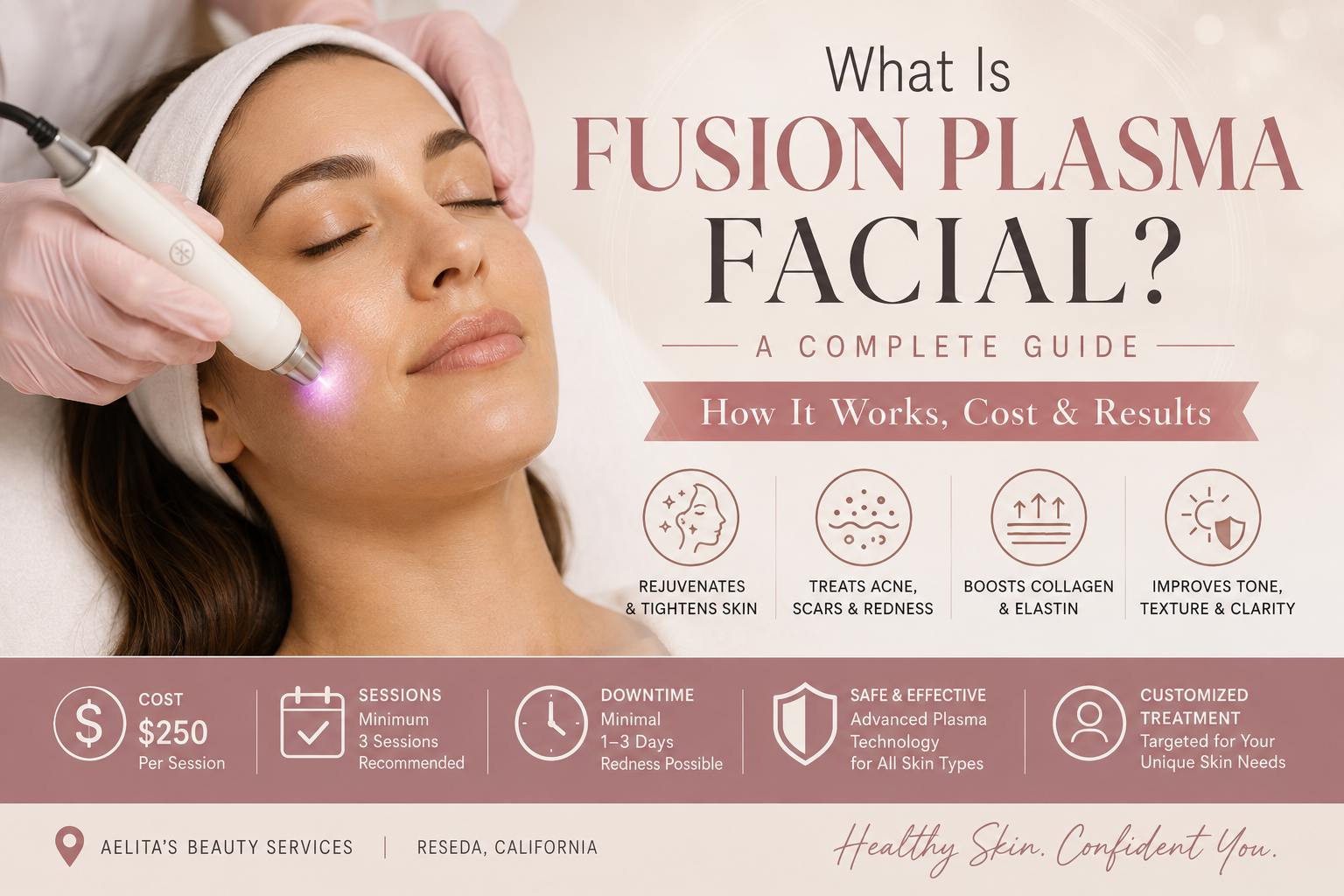
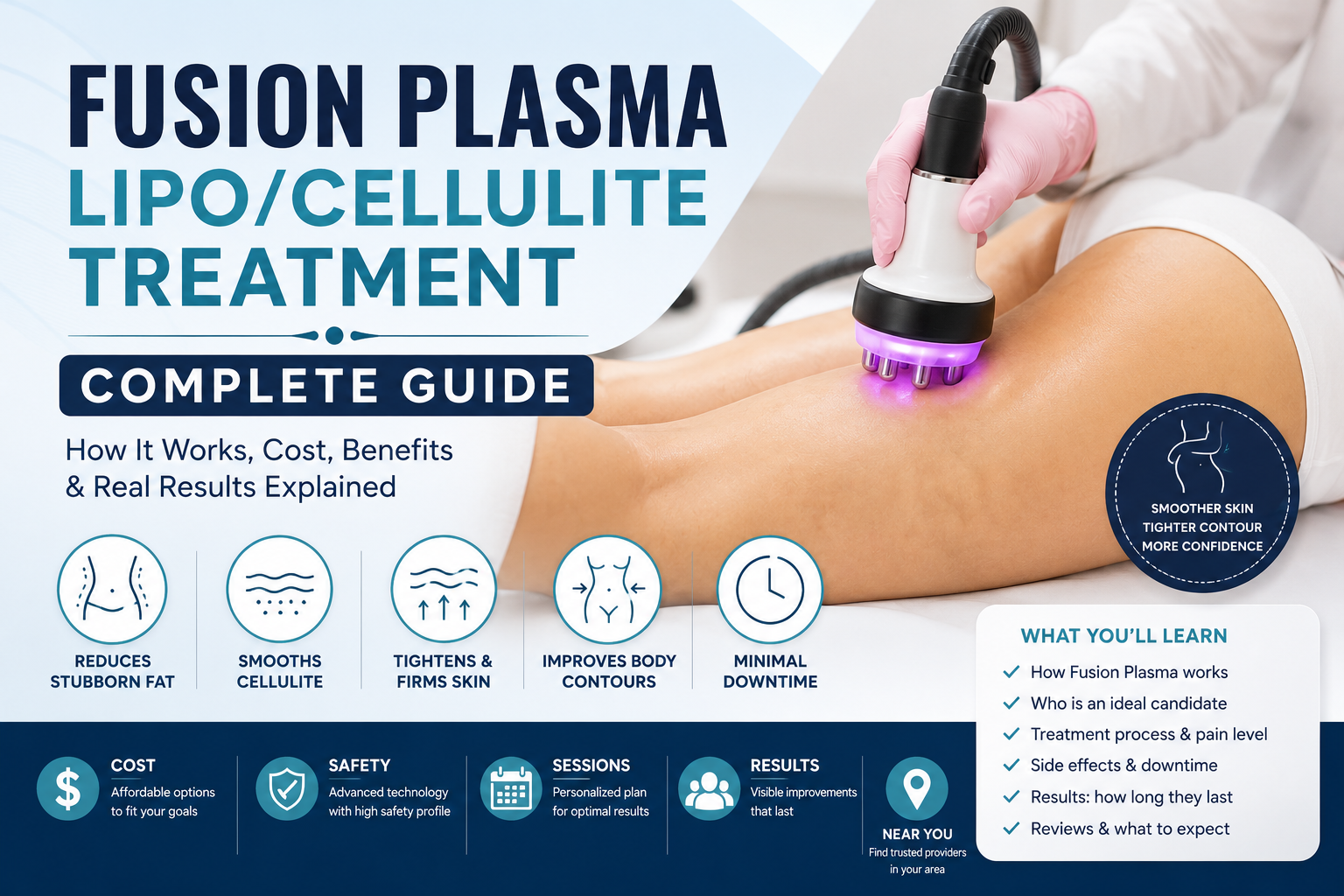
Cellulite, mild skin looseness, and small pockets of stubborn fat are among the most common concerns addressed by nonsurgical body-contouring treatments. One option increasingly promoted by aesthetic clinics is Fusion Plasma Lipo/Cellulite Treatment—a treatment described as combining plasma-based energy with body-contouring techniques to improve skin texture, firmness, and the appearance of cellulite.
This fusion plasma lipo/cellulite treatment guide explains how the procedure is intended to work, what it may and may not achieve, how much it may cost, and what to expect before, during, and after a session.
An important point should be clarified from the beginning: “Fusion Plasma Lipo/Cellulite Treatment” is not necessarily the name of one standardized medical device or universally accepted treatment protocol. Clinics may use the term for different devices, energy settings, applicators, or combinations of technologies.
Before booking, ask the provider for the exact device name, manufacturer, mechanism of action, regulatory status, treatment qualifications, and clinical evidence related to that specific system.
What Is Fusion Plasma Lipo/Cellulite Treatment?
Fusion Plasma Lipo/Cellulite Treatment is generally marketed as a nonsurgical or minimally invasive body-contouring procedure intended to address concerns such as:
Mild or moderate cellulite
Uneven or dimpled skin texture
Small areas of localized fat
Mild skin laxity
Reduced firmness
Poorly defined body contours
Depending on the system, the treatment may use plasma energy alone or combine it with technologies such as radiofrequency, ultrasound, vacuum massage, heat, mechanical stimulation, or lymphatic massage.
Plasma is often called the fourth state of matter. It is created when a gas becomes energized and ionized. In aesthetic medicine, plasma technologies may transfer controlled thermal or electrical energy to tissue.
However, plasma treatments vary considerably. Some devices operate at or near the surface of the skin, while others deliver energy below the skin during an invasive or minimally invasive procedure. These approaches should not be treated as interchangeable.
A surface-based esthetic treatment is different from plasma-assisted liposuction or subdermal plasma treatment performed by a physician. The possible benefits, risks, downtime, and professional qualifications are also different.
How Does Fusion Plasma Lipo/Cellulite Treatment Work?
The proposed mechanism depends on the equipment used. In general, providers may claim that the treatment works through one or more of the following processes.
Controlled Tissue Heating
Energy-based body treatments often use controlled heat to influence collagen-rich tissue. Heating may cause temporary collagen contraction and initiate a wound-healing response associated with longer-term collagen remodeling.
This process may gradually improve skin firmness or surface texture. It does not produce the same result as surgically removing excess skin.
Temporary Improvement in Circulation
Some treatments combine heat with massage or suction. This may temporarily increase local circulation and alter fluid distribution, making the treated area look smoother shortly after a session.
These early changes may not represent permanent fat loss or lasting cellulite correction.
Effects on Fat Cells
Some systems are marketed as “plasma lipo” because they are intended to target localized fat or assist with contouring. The way this happens varies.
Noninvasive devices may attempt to heat or disrupt fat cells without an incision. Minimally invasive plasma-assisted liposuction, by contrast, may be performed beneath the skin and combined with surgical fat removal.
Patients should ask whether the treatment actually destroys fat cells, temporarily changes their volume, or simply improves the appearance of the overlying skin.
Collagen and Elastin Remodeling
Controlled energy may stimulate biological repair processes that affect collagen and elastin. If this response occurs, the visible result usually develops gradually over several weeks or months rather than immediately.
Mechanical Massage or Lymphatic Effects
Vacuum, rollers, or massage attachments may temporarily reduce fluid retention and make cellulite look less visible. These effects can be useful, but they may require ongoing treatment to maintain.
Why Is Cellulite Difficult to Treat?
Cellulite is not simply excess fat. It is a structural skin condition influenced by fat cells, connective-tissue bands, skin thickness, circulation, hormones, genetics, and tissue architecture.
Fibrous bands called septae connect the skin to deeper tissue. When these bands pull downward while fat pushes upward, dimples and depressions can become visible.
This is why thin, athletic, or physically active people can still have cellulite. Weight loss may reduce its visibility in some people, but it does not necessarily release the tethering bands responsible for individual dimples.
Current medical reviews indicate that energy devices, subcision, acoustic-wave treatments, injectable approaches, and combination procedures may improve cellulite in selected patients. However, outcomes vary, and no treatment can guarantee complete or permanent removal.
Fusion Plasma Lipo/Cellulite Treatment Benefits
Potential fusion plasma lipo/cellulite treatment benefits may include:
Smoother-looking skin
Reduced visibility of mild cellulite
Improved firmness
Subtle body-contour refinement
Better-looking skin texture
Minimal or limited recovery after noninvasive sessions
No large surgical incision
Gradual, natural-looking changes
The word “potential” is important. Benefits depend on the technology, settings, treatment area, number of sessions, and individual tissue response.
A noninvasive plasma treatment should not be expected to reproduce the fat reduction of liposuction, the skin removal of body-lift surgery, or the targeted release of fibrous bands achieved through subcision.
Who Is a Good Candidate?
Appropriate fusion plasma lipo/cellulite treatment candidates may include adults who:
Have mild to moderate cellulite
Are near a stable body weight
Have small localized areas they want to contour
Have mild skin looseness rather than major excess skin
Understand that results may be subtle
Can follow aftercare instructions
Prefer a nonsurgical option
Have realistic expectations
The procedure is not designed as a weight-loss treatment. It is also unlikely to correct substantial skin overhang, severe laxity, or large volumes of fat.
You may not be a suitable candidate if you have an active infection, open wounds, impaired healing, uncontrolled medical conditions, a blood-clotting disorder, certain implanted electronic devices, or significant sensitivity in the treatment area.
Pregnancy, breastfeeding, medications, previous surgery, circulatory problems, skin disease, and a history of abnormal scarring should be discussed before treatment.
What Happens During a Session?
The appointment usually begins with an assessment of the area and a discussion of your goals. The practitioner may photograph and mark the treatment zone.
For a noninvasive procedure, a conductive gel may be applied before a handheld applicator is moved across the skin. You may feel warmth, pressure, suction, vibration, or mild tingling.
Treatment time may range from approximately 20 minutes to more than an hour, depending on the device, number of areas, and protocol.
Minimally invasive plasma-assisted procedures are more involved. They may require local anesthesia, small entry points, sterile technique, compression garments, and a longer recovery period.
Ask your clinic which category your procedure falls into. A treatment described as “plasma lipo” should not automatically be assumed to be noninvasive.
Fusion Plasma Lipo/Cellulite Treatment Pain Level
The typical fusion plasma lipo/cellulite treatment pain level depends heavily on treatment depth.
During a surface-based treatment, patients may feel heat, pulling, vibration, or pressure. The session should not feel intolerably hot or sharply painful. Tell the practitioner immediately if you experience burning or unusual discomfort.
A minimally invasive treatment may involve numbing injections, pressure, tenderness, and postoperative soreness. The practitioner may recommend over-the-counter or prescribed pain relief depending on the procedure.
Pain tolerance varies, so another patient’s review may not predict your experience.
Fusion Plasma Lipo/Cellulite Treatment Downtime
Noninvasive fusion plasma lipo/cellulite treatment downtime may be limited. Some patients return to everyday activities immediately.
Temporary effects can include:
Redness
Warmth
Tenderness
Mild swelling
Bruising
Tingling
Temporary numbness
Skin sensitivity
Stronger or minimally invasive treatments may involve several days or weeks of swelling, soreness, bruising, drainage, activity restrictions, or compression-garment use.
“Zero downtime” does not necessarily mean there will be no visible effects. Ask whether you are likely to look or feel treated, even if you are medically able to work.
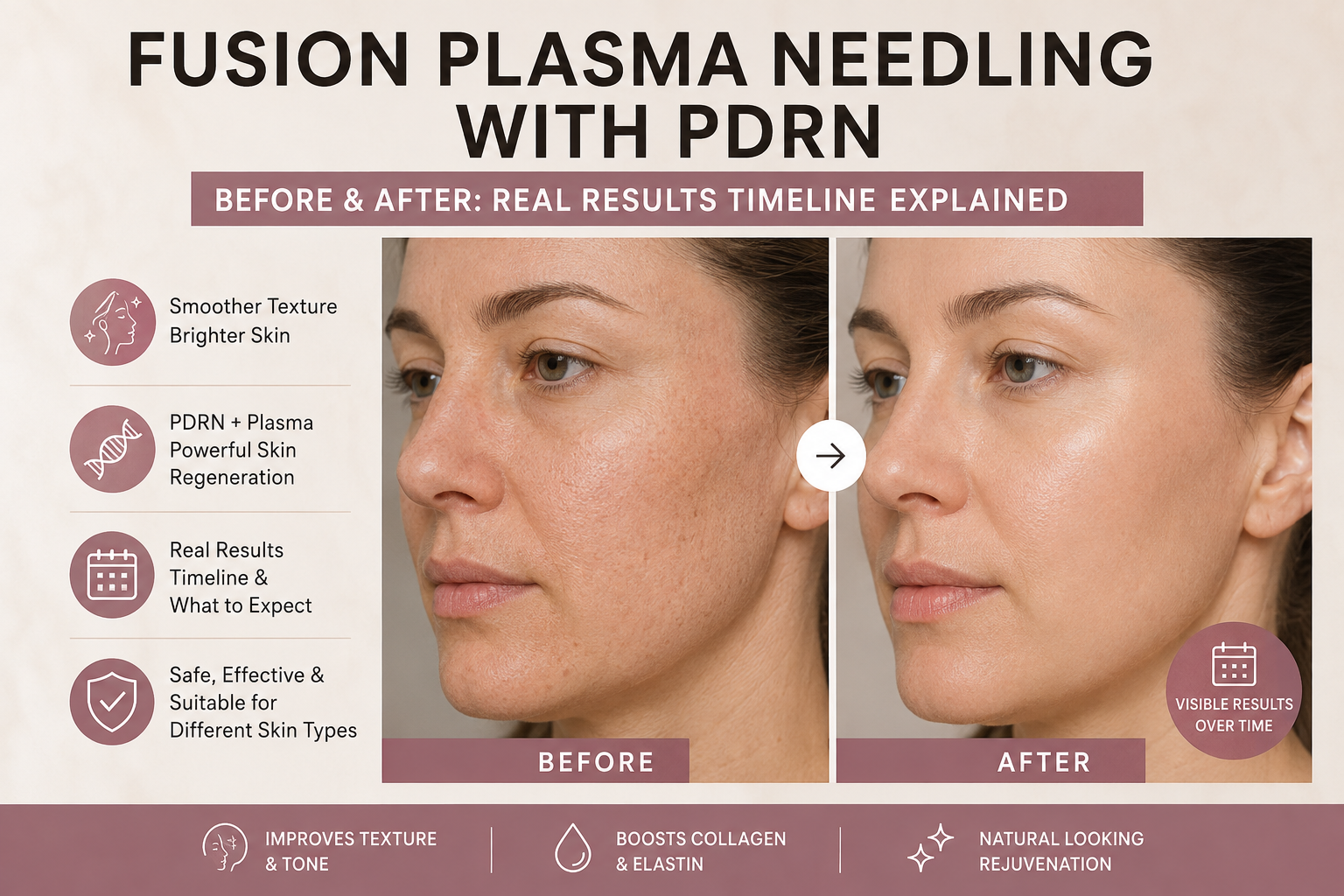
Fusion Plasma Lipo/Cellulite Treatment Before and After
When assessing fusion plasma lipo/cellulite treatment before and after images, check whether the photos use:
The same lighting
The same camera distance
The same body position
The same muscle tension
The same clothing
The same background
The same time of day
A clearly stated follow-up date
Body-contouring photos are particularly easy to manipulate through posture, twisting, flexing, dehydration, lighting, or waistband placement.
Ask to see unedited images of several patients with concerns similar to yours. One exceptional result should not be presented as the typical outcome.
Early photographs may reflect temporary swelling or fluid changes. Images taken several weeks or months after treatment are more useful for evaluating lasting improvements.
When Will Results Appear?
Some patients notice temporary smoothness or tightness shortly after treatment. This may be related to heat, tissue contraction, massage, or fluid movement.
More meaningful improvements in skin texture may take several weeks. If collagen remodeling occurs, changes may continue developing over two to six months.
Fat-reduction technologies also tend to produce gradual rather than instant changes because the body needs time to process affected tissue.
The expected timeline should be provided for the specific device. Avoid relying on a generic plasma-treatment timeline when the clinic cannot explain how its system works.
How Often Is Fusion Plasma Lipo/Cellulite Treatment Needed?
The answer to how often fusion plasma lipo/cellulite treatment is needed depends on the intensity and mechanism.
A low-intensity noninvasive treatment may be recommended as a series of four to eight sessions, sometimes spaced one or more weeks apart. Other devices may be used less frequently.
Minimally invasive plasma-assisted contouring may require only one main procedure, followed by medical reviews and possible later refinement.
Do not assume that more sessions are always better. Excessive thermal treatment can increase the risk of irritation, burns, inflammation, pigmentation changes, fat irregularity, or tissue injury.
How Long Do Results Last?
Patients commonly ask about fusion plasma lipo/cellulite treatment results—how long they last.
The answer depends on what caused the improvement.
Temporary changes in circulation, fluid distribution, or swelling may last days or weeks. Collagen-related improvements may last longer but gradually change as the body continues to age.
If fat cells are genuinely destroyed, those specific cells may not return. However, remaining fat cells can still enlarge if weight is gained.
Cellulite can also become visible again because the treatment may not permanently release the underlying fibrous bands. Maintenance sessions may therefore be recommended.
Lifestyle habits, hormonal changes, age, weight fluctuations, genetics, and skin quality can all influence longevity.
Fusion Plasma Lipo/Cellulite Treatment Side Effects
Possible fusion plasma lipo/cellulite treatment side effects include redness, swelling, tenderness, bruising, numbness, tingling, temporary unevenness, and skin sensitivity.
More serious complications may include:
Burns
Blistering
Infection
Scarring
Pigment changes
Persistent pain
Contour irregularity
Fat necrosis
Nerve injury
Prolonged swelling
Poor wound healing
Risks are generally greater when treatment is invasive, performed at high energy, or carried out by an inadequately trained operator.
Seek prompt medical advice for severe pain, spreading redness, fever, blistering, drainage, worsening swelling, breathing problems, or other unexpected symptoms.
Is Fusion Plasma Lipo/Cellulite Treatment Safe?
So, is fusion plasma lipo/cellulite treatment safe?
It may be appropriate for selected patients when an authorized device is used correctly by a qualified professional. However, safety cannot be determined by the words “Fusion Plasma” alone.
Ask the provider:
What is the exact device name?
Is the procedure noninvasive or minimally invasive?
What is the device cleared or approved to do in this country?
Who will perform the treatment?
What training and license does that person hold?
What complications have occurred in the clinic?
Who provides medical care if something goes wrong?
A device’s authorization for one purpose does not automatically establish safety or effectiveness for every off-label use.
Fusion Plasma Lipo/Cellulite Treatment Cost
The fusion plasma lipo/cellulite treatment cost varies by location, provider, device, treatment area, and number of sessions.
A noninvasive session may cost several hundred dollars per area. A complete treatment series may cost $1,000 to several thousand dollars.
Minimally invasive plasma-assisted contouring can cost substantially more because fees may include the surgeon, anesthesia, facility, garments, postoperative appointments, and related procedures.
Request a written quote explaining:
Cost per session
Number of recommended sessions
Areas included
Consultation fees
Aftercare products
Follow-up appointments
Touch-up policy
Taxes or facility charges
Refund or cancellation terms
Cosmetic body contouring is usually not covered by health insurance.
Fusion Plasma Lipo/Cellulite Treatment vs. Other Treatments
A helpful fusion plasma lipo/cellulite treatment vs other treatments comparison should consider the actual cause of your concern.
Versus Radiofrequency
Radiofrequency devices heat tissue to support skin tightening and may temporarily reduce cellulite. They often require multiple sessions and have relatively limited downtime. Reviews of cellulite treatments report that some modern radiofrequency devices can produce visible improvement, although durability varies.
Versus Cryolipolysis
Cryolipolysis targets localized fat through controlled cooling. It is primarily a fat-reduction treatment, not a direct treatment for fibrous cellulite bands. Published studies have reported measurable fat-layer reduction after treatment, but results and risks vary by device and patient.
Versus Acoustic-Wave Therapy
Acoustic-wave treatment uses pressure waves and may improve the appearance of cellulite through tissue stimulation. It generally requires a treatment series and maintenance.
Versus Subcision
Subcision treatments mechanically release the fibrous bands responsible for individual cellulite dimples. They may be more suitable for clearly defined depressions but can involve bruising, tenderness, and a minimally invasive procedure.
Versus Liposuction
Liposuction surgically removes fat. It is more effective for substantial localized fat than most noninvasive treatments, but it involves anesthesia, incisions, recovery, and surgical risks.
Liposuction is not primarily a cellulite treatment and may not improve dimpling. In some cases, cellulite can appear more noticeable if the overlying skin is loose or uneven.
Versus Exercise and Weight Management
Exercise does not directly cut fibrous bands, but improving muscle tone and maintaining a stable weight can improve overall contour and make cellulite less prominent.
Fusion Plasma Lipo/Cellulite Treatment Reviews
Online fusion plasma lipo/cellulite treatment reviews can provide insight into comfort, clinic service, and recovery. However, they should not replace medical evidence.
Reviews may be influenced by incentives, selective posting, individual expectations, or confusion about which device was used.
Look for reviews that mention the exact treatment name, number of sessions, follow-up duration, side effects, and whether the improvement lasted.
Treat dramatic testimonials and guaranteed claims cautiously.
Can an Esthetician Perform the Treatment?
Whether an esthetician fusion plasma lipo/cellulite treatment is legally permitted depends on local regulations, device classification, treatment depth, and the practitioner’s license.
A surface-level cosmetic treatment may fall within an esthetician’s permitted scope in some jurisdictions. A treatment that penetrates the skin, uses anesthesia, destroys fat, or delivers subdermal energy may require a physician or another licensed medical professional.
Do not assume that completion of a short manufacturer course is equivalent to medical training.
Ask who supervises the service, whether emergency protocols are available, and whether the practitioner is insured to perform the exact procedure.
How to Find Fusion Plasma Lipo/Cellulite Treatment Near Me
When searching for fusion plasma lipo/cellulite treatment near me, prioritize qualifications over convenience or promotional pricing.
Choose a clinic that:
Identifies the exact device
Provides a proper consultation
Explains alternatives
Uses standardized photography
Gives realistic expectations
Discusses risks in writing
Provides clear aftercare
Has a complication-management plan
Does not pressure you into buying a package immediately
Avoid providers who cannot explain whether the treatment affects fat, skin, fluid, or fibrous bands.
Final Thoughts
Fusion Plasma Lipo/Cellulite Treatment may help improve mild cellulite, skin texture, firmness, or localized body-contour concerns in appropriately selected patients. Its effectiveness depends on the exact technology and whether that technology addresses the actual cause of the concern.
A surface treatment may create temporary smoothing or gradual tightening, while a minimally invasive plasma procedure may provide a stronger effect with more risk and recovery. Neither should be described as effortless weight loss or a guaranteed cure for cellulite.
Before committing, verify the device name, treatment mechanism, provider credentials, total cost, expected downtime, and realistic duration of results.
The best treatment is not necessarily the one with the most impressive marketing language. It is the one that matches your anatomy, goals, budget, tolerance for recovery, and medical needs.
Medical disclaimer: This content is for general educational purposes only and does not replace personalized medical advice, diagnosis, or treatment. Device names, protocols, professional scopes of practice, and regulatory authorizations vary by country and jurisdiction. Consult a properly qualified healthcare professional before undergoing an aesthetic body-contouring procedure.