If you are researching fusion plasma lipo/cellulite treatment before and after results, you're likely weighing up whether this procedure is genuinely worth your time, money, and trust. That's a fair position to be in. With so many body-contouring options on the market, separating real clinical outcomes from overhyped marketing claims can feel exhausting.
This guide walks you through exactly what to expect at every stage — from your very first consultation to long-term maintenance months down the line. We'll cover realistic timelines, the number of sessions most people need, how results compare across skin types, aftercare essentials, and honest answers to the questions clinics don't always address upfront.
What Is Fusion Plasma Lipo/Cellulite Treatment?
Fusion plasma lipo/cellulite treatment is a non-invasive or minimally invasive body-contouring procedure that uses controlled plasma energy to target localised fat deposits and reduce the visible appearance of cellulite. Unlike traditional liposuction, it works without general anaesthesia, large incisions, or extended downtime.
The technology delivers targeted thermal energy beneath the skin's surface, disrupting fat cells and stimulating collagen remodelling simultaneously. This dual-action approach is what sets it apart — you're not just reducing volume but also improving skin texture and firmness in the treated area.
Common treatment zones include the abdomen, flanks (love handles), inner and outer thighs, upper arms, bra-line area, and beneath the chin.
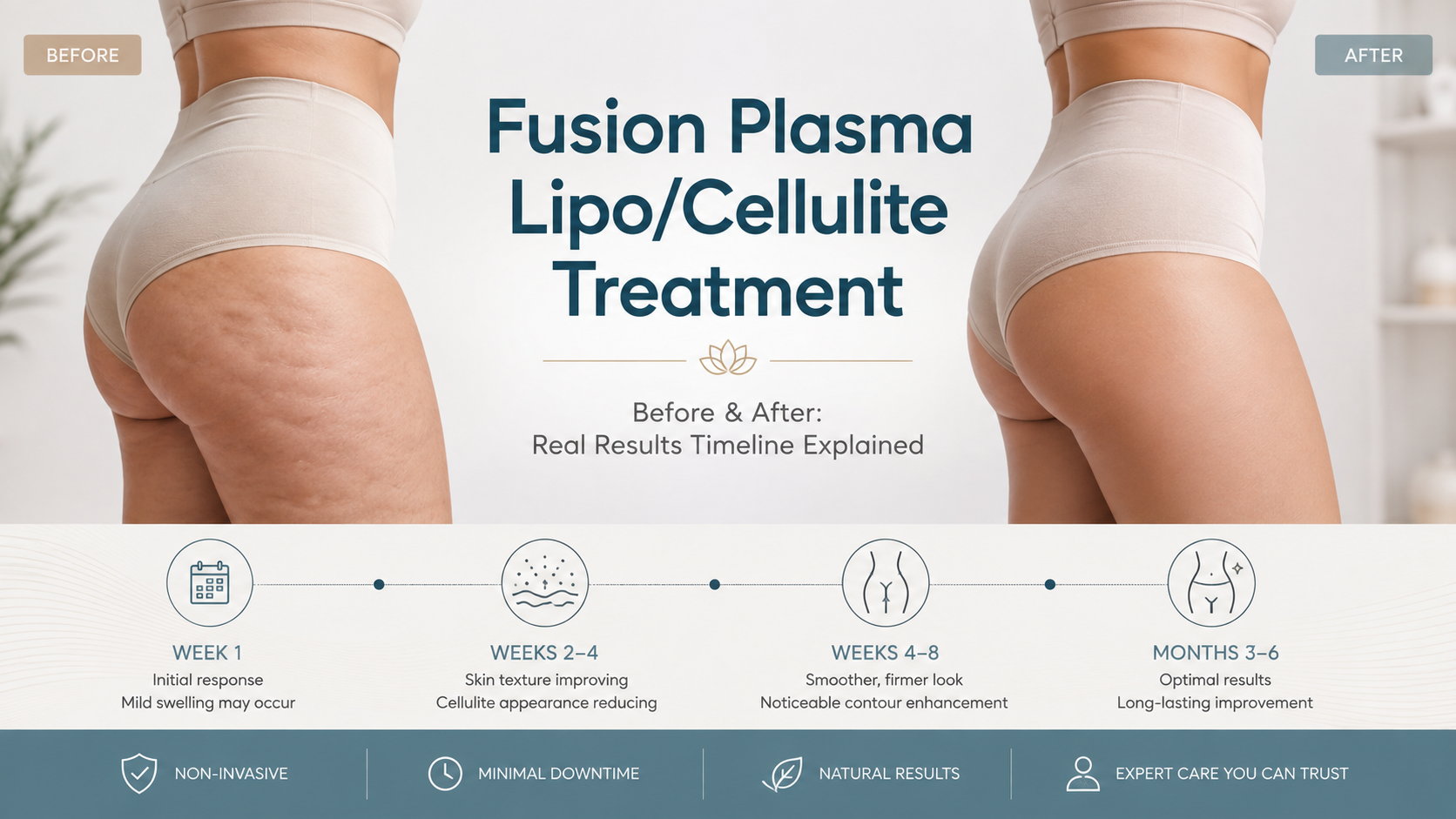
Fusion Plasma Lipo/Cellulite Treatment Before and After: What the Timeline Actually Looks Like
Understanding the fusion plasma lipo/cellulite treatment timeline is crucial for managing your expectations. Results don't appear overnight, and anyone who tells you otherwise isn't being straight with you.
Week 1: Immediately After Treatment
In the first few days following your session, mild swelling, redness, and tenderness in the treated area are completely normal. Some patients notice slight bruising, depending on how sensitive their skin is. You may actually look slightly larger in the treated zone during this initial phase — this is temporary inflammation, not a sign that the treatment hasn't worked.
Most people return to their daily routine within 24 to 48 hours. Light walking is encouraged, but strenuous exercise should be avoided for at least five to seven days.
Weeks 2–4: Early Changes Begin
By the second and third week, the initial swelling subsides and you'll start to see the first visible changes. The treated area begins to feel firmer, and contours start to emerge. Cellulite dimpling typically looks softer, though it won't have disappeared entirely at this stage.
This is the phase where many fusion plasma lipo/cellulite treatment results photos are misleadingly taken — the improvement is genuine, but the full result is still weeks away.
Weeks 4–8: Noticeable Transformation
Between four and eight weeks is where most patients see the most dramatic shift. Collagen remodelling is well underway, skin tightens visibly, and fat reduction becomes clearly apparent. Clothing fits differently. Measurements in the treated area typically show a reduction.
If cellulite was your primary concern, this is the window where the smoothing effect becomes most noticeable. The skin's surface texture continues to improve as new collagen fibres mature.
Months 3–6: Full Results Develop
The complete outcome of fusion plasma lipo/cellulite treatment typically matures between three and six months post-procedure. Collagen production continues during this period, meaning skin quality and firmness keep improving even months after the session itself.
This extended timeline is one reason why patience is so important. Judging your outcome at week two would be like judging a renovation halfway through — the foundation's been laid, but the finishing work is still in progress.
How Many Sessions of Fusion Plasma Lipo/Cellulite Treatment Do You Need?
One of the most common questions is how many sessions fusion plasma lipo/cellulite treatment actually requires. The honest answer depends on several factors, including the size of the treatment area, the amount of fat being targeted, the severity of cellulite, and your individual body composition.
As a general guide, here's what most clinics recommend:
Mild concerns (light cellulite, small pockets of fat): One to two sessions, spaced four to six weeks apart, are often sufficient to achieve a satisfying result.
Moderate concerns (visible cellulite, stubborn fat deposits): Two to four sessions are typically needed. Spacing sessions properly allows the body to process disrupted fat cells and begin collagen remodelling between appointments.
More significant concerns (deep cellulite, larger treatment areas): Four to six sessions may be recommended, sometimes combined with complementary treatments for optimal results.
Each session builds on the last. Skipping sessions or spacing them too far apart can reduce the cumulative effect, so consistency matters.
Fusion Plasma Lipo/Cellulite Treatment and Skin Type: Does It Matter?
Yes, skin type plays a meaningful role in both the treatment approach and the results you can expect. The fusion plasma lipo/cellulite treatment skin type consideration is something a responsible practitioner will assess during your initial consultation.
Lighter skin tones (Fitzpatrick I–III): Generally respond well to plasma-based treatments. The risk of post-inflammatory hyperpigmentation is lower, and practitioners can often use higher energy settings with confidence.
Medium skin tones (Fitzpatrick IV): Still excellent candidates, though settings may be adjusted slightly. Post-treatment skincare, particularly sun protection, becomes especially important.
Darker skin tones (Fitzpatrick V–VI): Fusion plasma lipo/cellulite treatment can still be effective, but extra caution is warranted. Energy levels are typically reduced to minimise the risk of pigmentation changes. Choosing a practitioner experienced in treating darker skin tones is essential — it's not something to compromise on.
Regardless of skin type, anyone considering this procedure should disclose their full medical history, current medications, and any history of keloid scarring or pigmentation issues during their consultation.
Fusion Plasma Lipo/Cellulite Treatment Realistic Expectations
Let's be candid about what fusion plasma lipo/cellulite treatment realistic expectations should look like. This is a body-contouring and skin-smoothing procedure, not a weight-loss solution.
What it can do:
Reduce localised, stubborn fat pockets that don't respond well to diet and exercise
Smooth and soften the appearance of cellulite (grades I–III)
Tighten and firm the skin in treated areas through collagen stimulation
Improve body proportions and contour
What it cannot do:
Replace a healthy lifestyle or serve as a substitute for significant weight loss
Completely eliminate cellulite in a single session (particularly grade III or IV)
Produce identical results for every patient — genetics, age, skin quality, and lifestyle all play a role
Deliver instant results — this is a gradual process, not an overnight transformation
Setting these boundaries from the outset helps ensure you're satisfied with your outcome rather than disappointed by unrealistic expectations.
Fusion Plasma Lipo/Cellulite Treatment vs Competitor Treatments
If you're comparing options, understanding how fusion plasma lipo/cellulite treatment vs competitor treatment alternatives stack up can help you make a more informed decision.
Fusion Plasma Lipo vs Cryolipolysis (Fat Freezing): Cryolipolysis works by freezing fat cells, which the body then metabolises naturally. It's effective for fat reduction but offers limited skin-tightening benefits. Fusion plasma treatment addresses both fat and cellulite whilst simultaneously stimulating collagen — giving it an advantage for patients concerned about skin texture as well as volume.
Fusion Plasma Lipo vs Radiofrequency (RF) Treatments: RF treatments primarily target skin laxity and mild cellulite through deep heating. They're excellent for skin tightening but typically less effective at meaningful fat reduction. Fusion plasma combines the thermal tightening element with more substantial fat-disrupting capability.
Fusion Plasma Lipo vs Cavitation: Ultrasonic cavitation uses sound waves to disrupt fat cells. It's generally considered effective for mild fat reduction but doesn't offer the collagen-stimulating benefits that fusion plasma provides. For patients with both fat and cellulite concerns, fusion plasma treatment tends to deliver more comprehensive results.
Fusion Plasma Lipo vs Surgical Liposuction: Traditional liposuction removes significantly more fat in a single procedure and is the gold standard for major volume reduction. However, it involves general anaesthesia, larger incisions, compression garments, and a recovery period of several weeks. Fusion plasma is better suited for patients seeking moderate improvement without the risks and downtime of surgery.
No single treatment is universally superior — the best option depends on your specific goals, budget, tolerance for downtime, and the recommendation of a qualified practitioner.
Fusion Plasma Lipo/Cellulite Treatment Recovery: What to Prepare For
The fusion plasma lipo/cellulite treatment recovery process is one of its key advantages over surgical alternatives. Most patients describe it as very manageable.
Days 1–3: Expect mild swelling, warmth, and tenderness in the treated area. Over-the-counter pain relief is usually sufficient if needed. Some patients report a sensation similar to light sunburn.
Days 3–7: Swelling begins to reduce. Any bruising starts to fade. Most people feel comfortable returning to work and social activities within this window, though this varies.
Weeks 1–2: Light exercise can usually be resumed. Avoid high-impact activities, saunas, steam rooms, and hot baths until your practitioner gives the all-clear.
Weeks 2–4: Normal activity resumes fully. The treated area continues to change and improve as the body processes disrupted fat cells and new collagen develops.
Your practitioner should provide you with a detailed aftercare plan tailored to your specific treatment. Follow it closely — the recovery phase directly influences your final result.
Fusion Plasma Lipo/Cellulite Treatment Aftercare Essentials
Proper fusion plasma lipo/cellulite treatment aftercare can make a genuine difference to the quality and longevity of your results. Here's what most practitioners recommend:
Hydration: Drink plenty of water in the days and weeks following treatment. Adequate hydration supports lymphatic drainage and helps the body metabolise disrupted fat cells more efficiently.
Compression: If advised by your practitioner, wearing a compression garment can reduce swelling and support the skin as it tightens.
Sun protection: Keep the treated area protected from direct sunlight for at least four to six weeks. UV exposure during the healing phase increases the risk of pigmentation changes, particularly for medium and darker skin tones.
Gentle movement: Light walking and gentle activity encourage circulation and lymphatic function, aiding recovery. Avoid vigorous exercise until your practitioner advises it's safe.
Skincare: Use only products recommended by your practitioner on the treated area. Avoid harsh exfoliants, retinoids, or active ingredients until the skin has fully settled.
Diet and lifestyle: Maintaining a balanced diet and regular exercise routine supports and extends your results. Weight gain after treatment can compromise the outcome.
Fusion Plasma Lipo/Cellulite Treatment Longevity: How Long Do Results Last?
Understanding fusion plasma lipo/cellulite treatment longevity helps you plan both financially and practically. When fat cells are disrupted and removed by the body, they don't regenerate in the same area. In that sense, fat reduction results can be long-lasting — provided you maintain a stable weight.
However, remaining fat cells in the treated area can still enlarge if you gain weight significantly. The treatment reduces the number of fat cells, but it doesn't make you immune to future fat accumulation.
As for cellulite improvement and skin tightening, the collagen remodelling effects typically last 12 to 24 months. Over time, the natural ageing process and gravity continue to affect skin quality, which is why maintenance sessions are worth considering.
Fusion Plasma Lipo/Cellulite Treatment Maintenance and Touch-Ups
To keep your results looking their best, periodic fusion plasma lipo/cellulite treatment maintenance sessions are recommended. Think of these as a top-up rather than a repeat of the full course.
Most practitioners suggest a fusion plasma lipo/cellulite treatment touch up every six to twelve months, depending on the treatment area and individual factors such as age, skin quality, and lifestyle. These sessions are typically shorter and less intensive than the initial course.
Maintenance appointments also provide an opportunity for your practitioner to assess how the treated area has responded over time and make any adjustments to the treatment plan.
Between sessions, the best maintenance strategy is the simplest one: stay active, eat well, keep hydrated, and protect your skin from excessive sun exposure.
Best Age for Fusion Plasma Lipo/Cellulite Treatment
There's no single best age for fusion plasma lipo/cellulite treatment, but skin quality and elasticity do influence outcomes.
In your 20s and 30s: Skin elasticity is generally at its best, which supports excellent tightening results. Patients in this age group often see the most pronounced skin-smoothing effects. However, younger patients may have less localised fat to address, making the procedure most suitable for those with specific stubborn areas.
In your 40s and 50s: This is the most common age range for fusion plasma treatment. Hormonal changes, particularly during perimenopause and menopause, often lead to increased fat deposition in areas like the abdomen and thighs. Collagen stimulation becomes especially valuable as the skin's natural production slows.
60s and beyond: Fusion plasma treatment can still be effective, though results may be more subtle due to reduced skin elasticity. A thorough consultation is important to ensure realistic expectations are set, and complementary skin-tightening treatments may be recommended.
Ultimately, candidacy is determined less by age and more by overall health, skin quality, body composition, and the specific goals you want to achieve.
Fusion Plasma Lipo/Cellulite Treatment FAQ
How painful is fusion plasma lipo/cellulite treatment?
Most patients describe the sensation as a warm, tingling feeling during the procedure. Topical anaesthetic is usually applied beforehand, and any discomfort is generally rated as mild. Post-treatment soreness is comparable to mild muscle ache and typically resolves within a few days.
Can fusion plasma treatment be combined with other procedures?
Yes, many practitioners combine it with radiofrequency skin tightening, lymphatic drainage massage, or other complementary treatments to enhance results. Your practitioner will advise on safe combinations based on your individual treatment plan.
Is fusion plasma lipo/cellulite treatment safe?
When performed by a qualified, experienced practitioner using properly maintained equipment, fusion plasma treatment has a strong safety profile. As with any procedure, there are minor risks including temporary swelling, bruising, redness, and in rare cases, skin sensitivity. A thorough consultation and patch test, where appropriate, help mitigate these risks.
Will the treated fat come back?
The fat cells disrupted during treatment are metabolised by the body and do not regenerate. However, remaining fat cells in the area can enlarge with significant weight gain. Maintaining a stable, healthy weight is the best way to preserve your results.
How soon can I see results after my first session?
Initial changes are typically visible within two to four weeks, with continued improvement over the following three to six months. Full results develop gradually as collagen remodelling progresses and the body processes disrupted fat cells.
Can I have fusion plasma treatment if I'm pregnant or breastfeeding?
No. Fusion plasma lipo/cellulite treatment is not recommended during pregnancy or breastfeeding. Most practitioners advise waiting until at least three to six months after you've finished breastfeeding before booking a consultation.
How do I choose the right practitioner?
Look for a practitioner who is fully qualified, insured, and experienced specifically in fusion plasma technology. Ask to see genuine fusion plasma lipo/cellulite treatment results photos from their own patients — not stock imagery or manufacturer-supplied examples. A reputable practitioner will welcome your questions and never pressure you into booking.
Does skin type affect my eligibility?
Skin type influences the treatment parameters but doesn't necessarily disqualify you. Practitioners experienced in treating a range of skin tones will adjust energy levels and aftercare recommendations accordingly. Darker skin tones require additional care to minimise pigmentation risk.
What's the difference between fusion plasma lipo and standard plasma treatments?
The "fusion" element typically refers to the combination of multiple energy modalities — such as plasma with radiofrequency or infrared — within a single device or protocol. This multi-technology approach allows practitioners to target fat, cellulite, and skin laxity simultaneously, rather than addressing each concern separately.
How much does fusion plasma lipo/cellulite treatment cost?
Pricing varies depending on the treatment area, number of sessions, geographic location, and the practitioner's experience. Most clinics offer a per-session price or a discounted package rate for a full course. Request a detailed quote during your consultation and be cautious of prices that seem significantly below market rate — quality equipment, training, and aftercare have a cost.
Final Thoughts
Fusion plasma lipo/cellulite treatment before and after results can be genuinely impressive when expectations are realistic, the practitioner is skilled, and the aftercare plan is followed properly. It's not a miracle cure, and it's not a replacement for a healthy lifestyle — but for targeted fat reduction, cellulite improvement, and skin tightening without surgery, it occupies a compelling space in the body-contouring landscape.
Take your time choosing a practitioner. Ask the right questions. Look at real, verified before-and-after photos. And give your body the time it needs to show you what the treatment can truly deliver.