Introduction: Most People Are Missing Out on Their Best Skin
Millions of people wash their face every single day — yet most of them have never experienced a professional facial. That gap between average and extraordinary skin often comes down to one untapped opportunity. If your skin feels dull, congested, or stubbornly resistant to your at-home routine, there's a reason: surface-level care can only go so deep. A professional esthetician works at a level your bathroom cabinet simply cannot reach. This article walks you through exactly what to expect at your first facial — from the moment you book to the glow you'll carry out the door — so you can walk in confident, prepared, and ready to transform your skin.
What to Expect at Your First Facial: The Big Picture
Let's start with the most important truth: your first facial is not just a luxury — it's a diagnostic, therapeutic, and confidence-restoring experience rolled into one appointment. Whether you're dealing with acne, dullness, early signs of aging, or you simply want to understand your skin better, a professional facial gives you answers, results, and a roadmap forward.
The phrase "what to expect at your first facial" is one of the most searched questions in skincare — and understandably so. Walking into an esthetician's treatment room for the first time can feel intimidating if you don't know what's coming. But once you know the process, step by step, the only thing you'll wonder is why you waited so long.
Before You Go: Preparing for Your First Facial Appointment
What to Do in the Days Leading Up to Your Facial
Preparation matters. A few small adjustments before your appointment can make a noticeable difference in your results and your comfort during the treatment.
Do This | Avoid This |
Drink plenty of water (hydrated skin responds better) | Waxing or threading within 48–72 hours prior |
Arrive with a clean, makeup-free face if possible | Retinol or exfoliating acids 3–5 days before |
Write down your current skincare products | Sun exposure or tanning beds 48 hours before |
Note any skin concerns or reactions you've had | Chemical peels or laser treatments within 2 weeks |
Arrive 10–15 minutes early to complete intake forms | Heavy exercise immediately before your appointment |
What to Tell Your Esthetician
Transparency is your best tool. Your esthetician is a licensed professional — not a mind reader. Before your treatment begins, be ready to share:
Any medications you're currently taking (especially Accutane, blood thinners, or topical prescriptions)
Known skin sensitivities or allergies
Recent cosmetic procedures or treatments
Your current skincare routine
Your primary skin concern and what you're hoping to achieve
Whether you're pregnant or nursing
A skilled esthetician like Aelita, who has over a decade of experience working alongside doctors and medical spas, will use this information to fully customize your treatment. No two facials should be identical — your skin is unique, and your treatment should reflect that.
What to Expect at Your First Facial: A Step-by-Step Breakdown
Step 1: The Skin Consultation (10–15 Minutes)
Every professional facial begins with a thorough consultation. This is your esthetician getting to know your skin — its history, its habits, and its needs.
During this stage, your esthetician will:
Examine your skin under magnification or specialized lighting
Ask about your lifestyle, diet, stress levels, and sleep (all of which impact skin)
Assess your skin type (oily, dry, combination, sensitive, or normal)
Identify specific concerns such as hyperpigmentation, fine lines, clogged pores, or dehydration
Recommend a treatment tailored to your skin's current condition
Pro tip: This consultation is also your opportunity to ask questions. Don't hold back. Ask about ingredients, ask about what you're seeing on your own skin, ask about what's working and what isn't in your routine. A great esthetician welcomes this conversation.
Step 2: Cleansing and Skin Prep
Once the consultation is complete, the actual treatment begins with a thorough double cleanse. This removes makeup, surface oil, and environmental pollutants that would otherwise block product absorption throughout the rest of the treatment.
A professional cleanser is chosen based on your skin type:
Gel or foam cleansers for oily and acne-prone skin
Cream or balm cleansers for dry and sensitive skin
Micellar or dual-phase cleansers for combination skin
After cleansing, warm steam is often applied using a steamer to open pores, soften the skin, and prepare it for extractions or deeper product penetration. For most first-time clients, this step alone feels transformative — a luxurious, spa-like warm mist that signals your body to relax.
Step 3: Exfoliation — Sloughing Away the Dullness
This is where the real transformation begins. Exfoliation removes the layer of dead skin cells that sits on the surface of your skin, dulling your complexion and preventing your serums and moisturizers from working effectively.
There are two primary types of exfoliation used in professional facials:
Physical Exfoliation
Uses fine abrasive particles or a mechanical device
Best known example: Microdermabrasion Facial
Microdermabrasion uses a diamond-tip wand or micro-crystals to gently resurface the skin, improving texture, tone, and radiance in a single session
Ideal for dullness, mild hyperpigmentation, and rough texture
Chemical Exfoliation
Uses AHAs (alpha hydroxy acids) or BHAs (beta hydroxy acids)
AHAs like glycolic and lactic acid target surface pigmentation and fine lines
BHAs like salicylic acid penetrate into pores, making them ideal for acne-prone skin
Often used as part of an Acne Facial to chemically unclog and purify congested pores
For first-time clients, the exfoliation step is carefully calibrated. There is no aggressive peeling or uncomfortable procedures — it's a controlled, professional process designed to be effective without being harsh.
Step 4: Extractions — The Most Talked-About Step
Ask anyone what they've heard about facials and they'll mention extractions. This step involves manually removing blackheads, whiteheads, and congested pores. It's the part most people are nervous about — and also the part most people say they didn't need to worry about.
In professional hands, extractions are performed with:
Sterile tools or properly gloved fingers
A technique that minimizes skin trauma
Pre-softened skin (thanks to the steam step) that releases blockages more easily
Targeted pressure only where needed — not across the entire face
What extractions feel like: A pinching or squeezing sensation, occasionally tender on certain areas like the nose and chin. It's rarely described as painful when performed correctly. The skin may appear slightly red immediately after, which typically fades within an hour or two.
Will you need extractions? Not always. Your esthetician will assess whether extractions are appropriate for your skin and skip this step if your skin is too sensitized, has active inflamed acne, or simply doesn't need it that day.
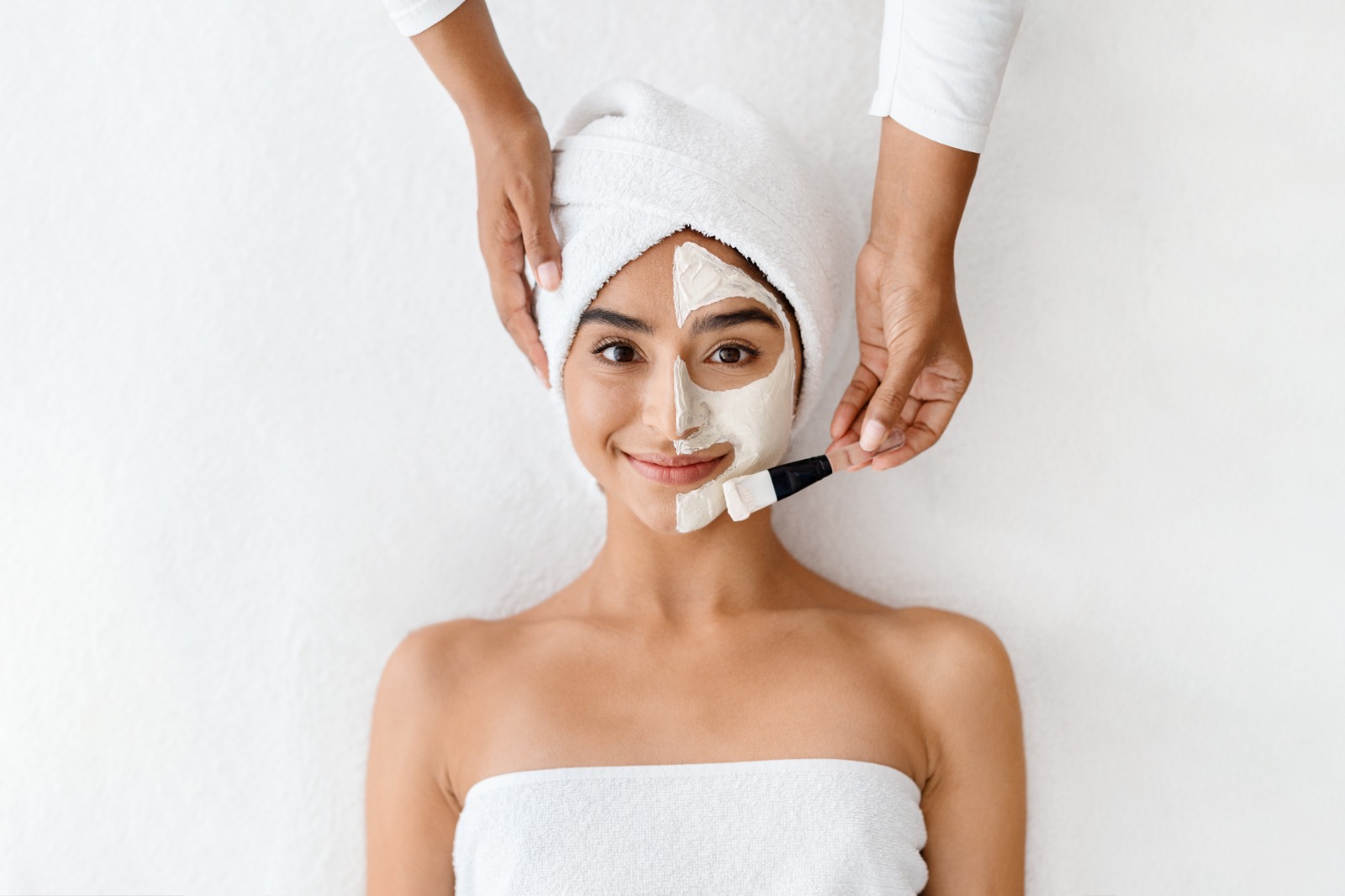
Step 5: Treatment Serums and Masks — The Skin Feast
After exfoliation and extractions, your skin is primed and receptive. Now comes the deeply nourishing phase — layered application of treatment serums, ampoules, and a targeted mask chosen specifically for your skin's needs.
Common mask types used in professional facials:
Mask Type | Best For | Key Benefit |
Clay/Kaolin Mask | Oily, acne-prone | Draws out impurities, controls sebum |
Hydrating Sheet Mask | Dry, dehydrated | Intensely replenishes moisture |
Enzyme Mask | Sensitive, dull | Gentle brightening, no irritation |
Collagen Mask | Mature, aging skin | Firms, plumps, and smooths |
Brightening Vitamin C Mask | Hyperpigmentation | Reduces dark spots, evens tone |
During the mask phase, many estheticians will also incorporate:
Facial massage to boost circulation and lymphatic drainage
Décolleté and neck treatment to extend results beyond the face
Shoulder and scalp massage for deep relaxation
This is when most clients drift into a meditative state of pure relaxation. The treatment room is quiet, the lighting is dim, and every touch is purposeful. It's one of the most underrated parts of what to expect at your first facial.
Step 6: Advanced Treatments — Where Technology Meets Skincare
Depending on your skin's needs and the services offered, your facial may incorporate advanced technologies that elevate your results dramatically. At a premier esthetic studio, you might experience one or more of the following:
Celluma Pro LED Therapy
LED (Light Emitting Diode) therapy uses specific wavelengths of light to trigger biological responses in skin cells without heat or UV exposure. It's completely painless and deeply effective.
Red light (630–700nm): Stimulates collagen production, reduces inflammation, improves tone and elasticity — ideal for aging and sensitive skin
Blue light (415–445nm): Kills acne-causing bacteria (P. acnes) at the source — ideal for breakout-prone skin
Near-infrared light: Penetrates deeper tissue to support healing and reduce pain
A Celluma Pro LED session typically runs 15–30 minutes and can be added to any facial or booked as a standalone treatment. Clients often describe the experience as warm, peaceful, and deeply relaxing — like sitting in sunlight without any of the damage.
Thermoclear Treatment
Thermoclear is a professional skin-clearing device that uses high-frequency electrical current to treat and eliminate benign skin irregularities that are resistant to other treatments.
Treatable conditions include:
Cherry angiomas (red spots)
Milia (tiny white cysts)
Skin tags
Sebaceous hyperplasia (enlarged oil glands)
Broken capillaries
Thermoclear is a fast, precise treatment — most sessions run between 15 and 30 minutes — with minimal downtime. It's a game-changer for clients dealing with textural irregularities they've struggled to address for years.
High-Frequency Treatment (Acne Facial)
Often incorporated into the Acne Facial with High Frequency, this technique uses a glass electrode that delivers a gentle electrical current to the skin surface. It:
Kills acne-causing bacteria
Reduces active breakouts and inflammation
Promotes faster healing of existing blemishes
Stimulates circulation for overall skin health
High frequency is particularly powerful immediately after extractions, as it sanitizes the skin and reduces post-extraction redness.
Step 7: Moisturization and SPF — Sealing in the Results
The final stage of your facial involves:
Toner — Rebalances skin pH after all treatments
Eye cream — Applied to the delicate orbital area to address puffiness, dark circles, or fine lines
Serum — A concentrated active ingredient blend chosen for your skin type
Moisturizer — Rich or lightweight depending on your skin's needs
SPF — Non-negotiable. Fresh, exfoliated skin is more photosensitive. Sunscreen protects your investment.
Your esthetician will also recommend professional-grade skincare products to maintain and extend your results at home. Products like the BIO Hydra C Serum (a Vitamin C-powered hydration booster), ICE Balancing Lotion (for oily and combination skin), and SPF Solar Shield 30 Classic Tint are formulated to complement your in-office treatments — and they make a noticeable difference when used consistently.
What to Expect After Your First Facial
Immediately After: The Glow Is Real
Right after your appointment, your skin will look:
Brighter and more luminous
Smoother in texture
Clearer in tone (especially if extractions were performed)
Slightly pink in some areas (normal, fades within hours)
That post-facial glow is not a myth. It's the result of freshly exfoliated skin, stimulated circulation, and deeply hydrated cells — all working together.
The First 24–48 Hours: What's Normal
Your skin has just been through a thorough professional treatment. It needs gentle handling in the days immediately following.
Normal post-facial experiences:
Mild redness or sensitivity (especially post-extractions)
Slight breakouts (this is called "purging" — congestion working its way out)
Skin feeling tight or dry initially, then soft as hydration absorbs
Minor flaking if exfoliation was intensive
What to avoid for 24–48 hours after your facial:
Makeup (if possible — let skin breathe)
Heavy exercise or sweating
Direct sun exposure without SPF
Harsh actives: retinol, AHAs, benzoyl peroxide
Picking or touching your face
The 5–7 Day Mark: Your Skin Settles In
By the end of the first week, the full results of your facial become visible. Most clients notice:
Significantly clearer skin
Reduced appearance of pores
More even skin tone
A lasting softness and radiance
Better makeup application and product absorption
How Often Should You Get a Facial?
This is one of the most common questions following a first appointment — and the answer depends on your goals.
Skin Goal | Recommended Frequency |
General maintenance and glow | Once a month |
Active acne management | Every 2–3 weeks initially |
Anti-aging and collagen support | Every 4–6 weeks |
Hyperpigmentation correction | Every 3–4 weeks with treatment series |
Special occasion prep | 1 week before the event |
Sensitive or reactive skin | Every 6–8 weeks |
The 28-day rule: Your skin naturally cycles through cell turnover approximately every 28 days. Monthly facials align with this cycle, ensuring you're consistently clearing away old cells, addressing new congestion, and feeding the skin with professional-grade actives.
Common First-Facial Questions Answered
Does a facial hurt?
For the majority of clients, facials are a relaxing, pleasurable experience. The only potentially uncomfortable moment is during extractions, which can cause brief pinching sensations. A skilled esthetician works carefully and minimizes discomfort.
Is a facial suitable for sensitive skin?
Absolutely. In fact, professional facials are often more appropriate for sensitive skin than at-home treatments, because an esthetician can select the right products and techniques for your skin's tolerance. Always disclose your sensitivity during the consultation.
Can I get a facial if I have active acne?
Yes — but not all facials are appropriate for all types of acne. An Acne Facial with High Frequency is specifically designed to treat active breakouts. Avoid heavy exfoliating or extracting facials during inflamed or cystic acne flare-ups.
How long does a facial take?
Most facials run between 45 and 90 minutes. Express treatments may be shorter (30 minutes), while advanced or combination treatments can extend to 90+ minutes.
Should I wear makeup to my appointment?
No makeup is ideal, but if you arrive with it on, your esthetician will cleanse it off as part of the treatment. Avoid heavy foundation or concealer if you can.
What's the difference between a spa facial and a medical-grade facial?
Spa facials focus on relaxation and general skin health. Medical-grade or esthetician-performed facials — especially those done in collaboration with medical spas or alongside doctors — use clinical-strength products and advanced technology. The results tend to be more significant and longer-lasting.
Personalized Facials vs. Generic Treatments: Why Customization Changes Everything
One-size-fits-all is the enemy of great skin. Your skin's needs change with the season, your hormones, your stress levels, and your age. A facial that works beautifully in January may not be what your skin needs in July. That's why working with an experienced esthetician who prioritizes personalized treatment is so critical.
A customized facial approach means:
Your specific skin type and current condition are assessed at each visit
Products are selected based on what your skin needs right now
Treatment intensity is adjusted to match your skin's current tolerance
Your long-term skin goals are integrated into every appointment
This is the philosophy at the heart of a truly professional esthetic practice — one built on the belief that skincare is not transactional, but transformational.
The Skincare Products That Extend Your Facial Results
Your esthetician's work doesn't have to end when you walk out the door. The right at-home products, especially professional-grade formulations, extend and compound your in-office results between appointments.
Key Products to Ask Your Esthetician About:
BIO Hydra C Serum A concentrated Vitamin C serum that delivers antioxidant protection, brightening benefits, and skin-plumping hydration. Best used in the morning under SPF.
ICE Balancing Lotion A lightweight, balancing moisturizer ideal for oily, combination, or acne-prone skin. Hydrates without clogging pores or contributing to shine.
SPF Solar Shield 30 Classic Tint A tinted, broad-spectrum SPF that protects freshly treated skin from UV-induced damage while providing a subtle, skin-evening tint. Non-negotiable for post-facial care.
When professional treatments and professional products work in tandem, the results are cumulative — your skin continues improving with every passing week.
A Note on Confidence: What Your Skin Does for Your Self-Esteem
It would be reductive to talk about facials purely in terms of pores and pigmentation. Because what most clients report feeling after their first facial isn't just better skin — it's more confidence. There's something deeply affirming about investing in yourself, being cared for by a skilled professional, and watching your skin respond. That glow isn't just physical. It shows up in the way you hold yourself, the way you engage with the world, and the way you feel when you glance in the mirror.
Skincare, at its best, is an act of self-respect.
How to Book Your First Facial
If you've been hesitant, let this be the nudge you needed. Your first facial is not a luxury reserved for special occasions — it's a practical, powerful investment in your skin's health and your own confidence.
Here's how to get started:
Call to book your appointment — consultations are built into every treatment
Share your skin concerns when you arrive — the more your esthetician knows, the better your results
Arrive without makeup if possible, and plan a relaxed day afterward
Ask questions — about your skin, your products, your treatment plan
Commit to a maintenance schedule — one facial is a great start; a consistent routine is transformative
Your skin is worth it. You are worth it.
Final Thoughts: What to Expect at Your First Facial — and Every One After
Knowing what to expect at your first facial removes the uncertainty and replaces it with anticipation. From the initial consultation and double cleanse to advanced technologies like LED therapy and Thermoclear, a professional facial is a complete skin health experience — not just a feel-good treatment.
You'll leave with smoother texture, clearer pores, and a radiance that your regular routine simply cannot manufacture. More than that, you'll leave with a deeper understanding of your skin and a clear path forward.
The transformation doesn't happen in one appointment — but it always starts with one. Book yours, and begin the journey to your healthiest, most confident skin.
Quick Reference: What to Expect at Your First Facial — Summary Table
Stage | What Happens | Duration |
Skin Consultation | Skin analysis, health history, treatment planning | 10–15 min |
Cleansing | Double cleanse, steam application | 10 min |
Exfoliation | Physical or chemical exfoliation | 10–15 min |
Extractions | Manual pore clearing (if needed) | 10–15 min |
Advanced Treatments | LED, high-frequency, Thermoclear | 15–30 min |
Mask + Massage | Targeted mask, facial massage, relaxation | 15–20 min |
Moisturize + SPF | Serum, moisturizer, sun protection | 5–10 min |
Total | 60–90 min |